
Description
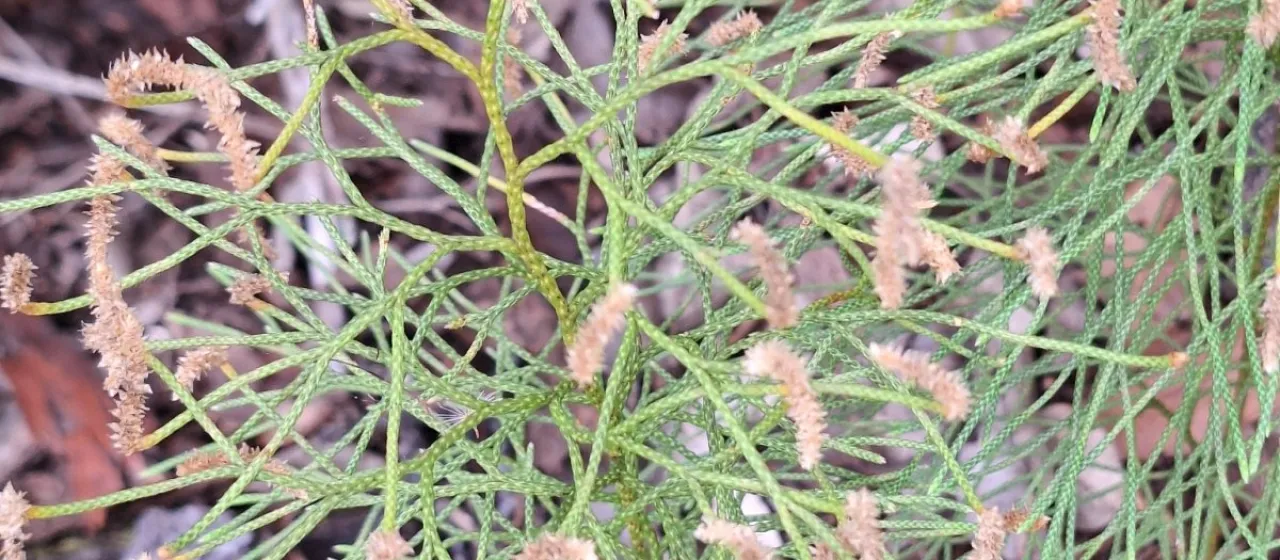
Lycopodium deuterodensum is a perennial spore-bearing plant belonging to the Lycopodiaceae family. Known for its dense, mat-forming growth habit, it visually resembles a miniature coniferous forest floor. While not a conventional agricultural commodity, it is highly regarded in specialized horticulture, particularly for botanical study and decorative landscaping in environments that mimic natural forest ecosystems.
The species is native to regions of Australia and New Zealand, where it thrives in cool, moist forest environments and heaths. Its evolutionary history has made it well-adapted to specific ecological niches with acidic soils and high atmospheric humidity. In terms of distribution, it remains a plant that requires careful management if introduced to non-native greenhouse environments or specialized ornamental settings.
Botanically, this plant is characterized by creeping stems that branch out into upright, dense foliage consisting of scale-like leaves. Its reproductive cycle relies on the production of spores within terminal strobili. Due to its slow-growing nature, the plant requires significant patience and specific light management to thrive. It does not possess true seeds, making its propagation significantly different from typical field crops.
Regarding agrotechnical requirements, Lycopodium deuterodensum demands a specialized acidic substrate (pH 4.5–5.5) with excellent drainage. It is highly sensitive to soil compaction and waterlogging. In terms of climate, it prefers stable temperatures with partial to full shade. Providing the correct balance of moisture and airflow is the most critical aspect of managing the crop to ensure vigorous health and prevent environmental stress.
Economic and practical applications for this species are limited but distinct:
- Use in shaded garden landscapes and terrariums.
- Educational and research purposes in botany departments.
- Collector-grade horticulture in specialist nurseries.
Typical diseases involve various fungal pathogens, such as root rot, which are often triggered by improper moisture management or stagnant water in the root zone. Common pests include spider mites or soil-borne nematodes, especially in closed-environment nurseries. Effective management involves integrated pest control strategies focusing on maintaining optimal humidity and strictly clean, sterile substrate conditions.