
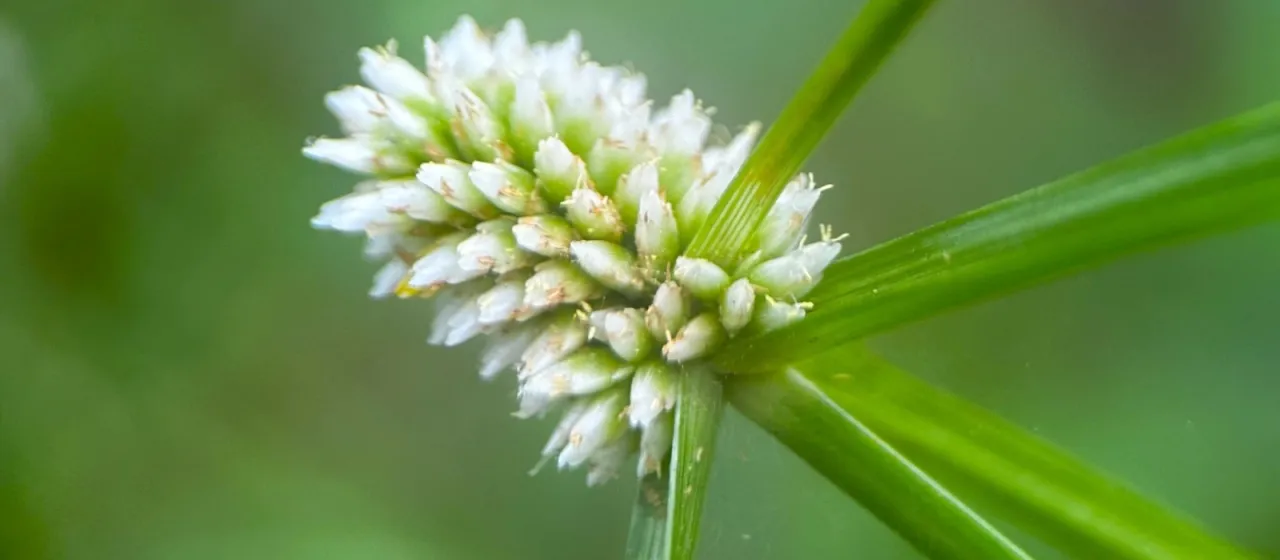
Description
Star rush (Mariscus coloratus), also known by its scientific name, belongs to the sedge family, Cyperaceae. In the context of specialized plant production, this species is recognized for its unique appearance, characterized by white, petal-like bracts that emerge beneath the flower head, creating a star-like structure that makes it highly popular in ornamental water gardening.
The species originates from the tropical and subtropical regions of the Americas. Its natural habitat is typically wet, marshy terrain and riverbanks. From an agricultural standpoint, it serves as an excellent candidate for constructed wetlands and areas designated for phytoremediation, as it effectively thrives in saturated soil conditions that would be detrimental to most traditional field crops.
Botanically, Mariscus coloratus is a perennial herb with triangular culms typical of the sedge family. It spreads via rhizomes, forming dense clusters of vegetation. The plant is distinct due to its inflorescence, which is surrounded by leaf-like bracts that provide a long-lasting visual display throughout the growing season, contributing to its aesthetic value in garden and pond design.
Cultivation requirements for this crop focus heavily on moisture management. It requires consistently wet or waterlogged soil to reach full maturity. In terms of light, it performs best in full sun, which helps in the development of its signature white bracts. The soil should ideally be rich in organic matter, and standard agricultural maintenance involves dividing the clumps every few years to prevent overcrowding and ensure vigorous growth.
Common issues affecting Star rush include:
- Fungal infections occurring in stagnant water conditions.
- Infestations by aphids during the warm season.
- Root rot if the drainage is insufficient in non-aquatic garden beds.