
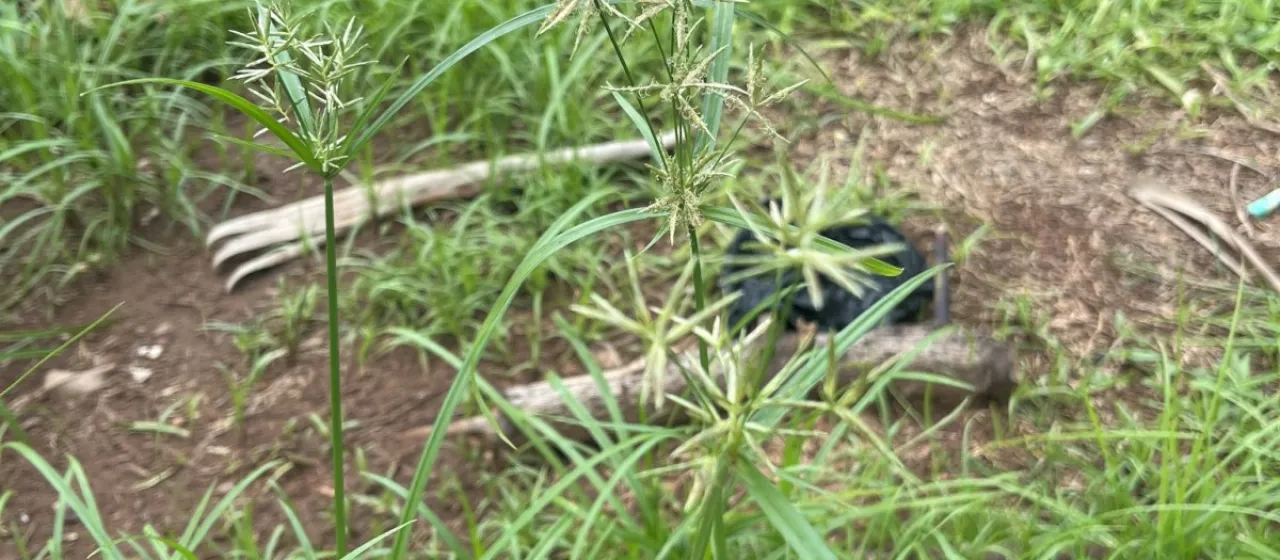
Description
Rusty-green sedge (Mariscus ferrugineoviridis) is a perennial herbaceous plant belonging to the Cyperaceae family. In agronomic contexts, it is recognized as a resilient species that occupies niche habitats, specifically in tropical and subtropical regions characterized by seasonal flooding and high moisture availability.
The origin of this species is linked to the wetlands of Southeast Asia and Australia. It is highly adapted to riparian zones, water channels, and swampy meadows. Because of its natural adaptation to aquatic environments, it survives in conditions where traditional forage grasses often experience root rot and physiological stress.
Botanically, the plant is characterized by a strong rhizome system and triquetrous stems that provide structural stability. The inflorescences are distinctively rusty-green in appearance, distinguishing it from other Cyperus or Mariscus species. The leaves are typically fibrous, serving as a sustainable source of biomass in marshy land management.
Regarding cultivation requirements, the plant thrives in silt-rich, waterlogged soils with a neutral pH. Agro-technical management involves maintaining proper water levels and implementing a controlled cutting regime. Early harvesting is recommended to ensure the highest crude protein content, as the plant tends to become highly lignified at maturity.
The economic and agricultural utility of this plant is multifaceted:
- Serving as a supplemental forage crop for buffaloes and cattle in wetland ecosystems.
- Contributing to bio-filtration systems and water quality management in irrigation channels.
- Functioning as a tool for soil erosion control along sensitive water banks.
- Providing a source of raw organic matter for composting and mulching applications.
Disease management is primarily focused on controlling fungal pathogens that thrive in high-humidity conditions, such as leaf spot and stem blight. Pest pressure, including sap-sucking insects and specialized grass-feeding larvae, requires regular monitoring, especially during the peak growth season when the plant tissues are softest.