
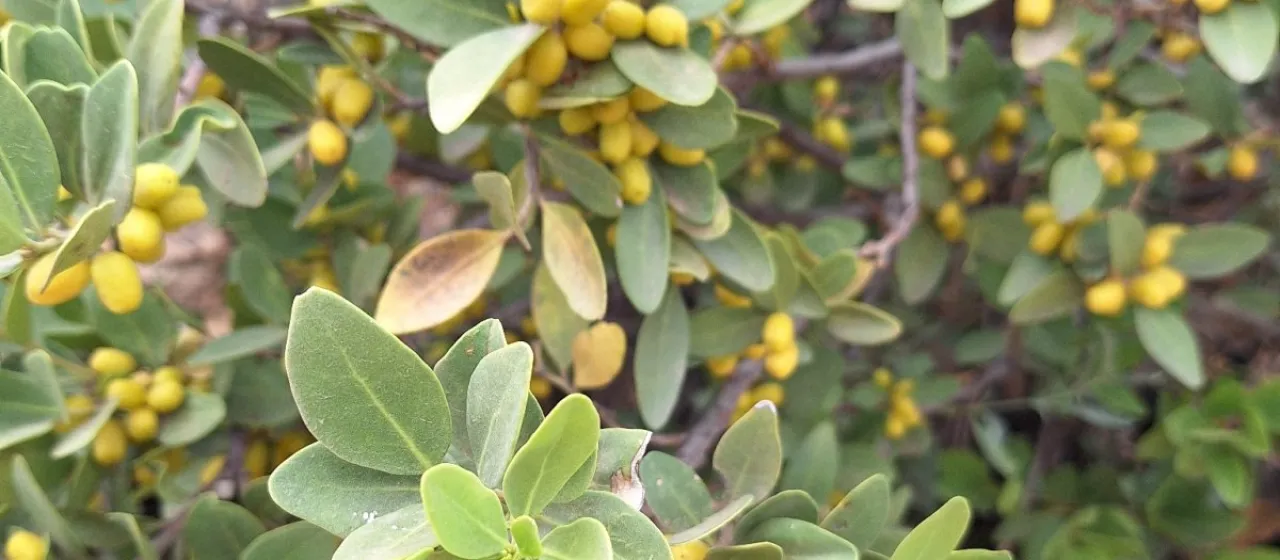
Description
Maytenus oleoides, commonly known as the olive-leaved maytenus, is an evergreen shrub or small tree belonging to the Celastraceae family. It is recognized for its dense, leathery foliage and its architectural value, making it a distinct choice for xeriscaping and sustainable gardening projects.
Native to Southern Africa, this plant has adapted to Mediterranean-like climatic conditions. It thrives in regions characterized by distinct dry seasons, which has forged its reputation as a highly resilient and drought-tolerant species. Its presence in the wild is mostly noted in scrubland and on rocky outcrops.
The botanical structure of the plant features ovate-elliptical leaves that resemble those of the olive tree, which is the origin of its specific epithet. The plant produces small, discreet flowers followed by dehiscent capsules. Its growth habit is typically slow, resulting in a compact and sturdy structure that requires minimal structural pruning over time.
Regarding agrotechnical requirements, Maytenus oleoides demands well-draining soil and a sunny or partially shaded location. While it can withstand periods of neglect, establishing the plant requires consistent irrigation during the first year. Fertilization should be kept at moderate levels, focusing on balanced nutrients to support steady growth.
The plant is primarily utilized for landscape architecture, particularly in areas where water conservation is a priority. It is also valued for its hardiness against environmental stressors. While generally robust, gardeners should be vigilant for common pests:
- Scale insects affecting the stems and leaves.
- Spider mites during prolonged hot and dry periods.
- Fungal pathogens triggered by poor air circulation.