
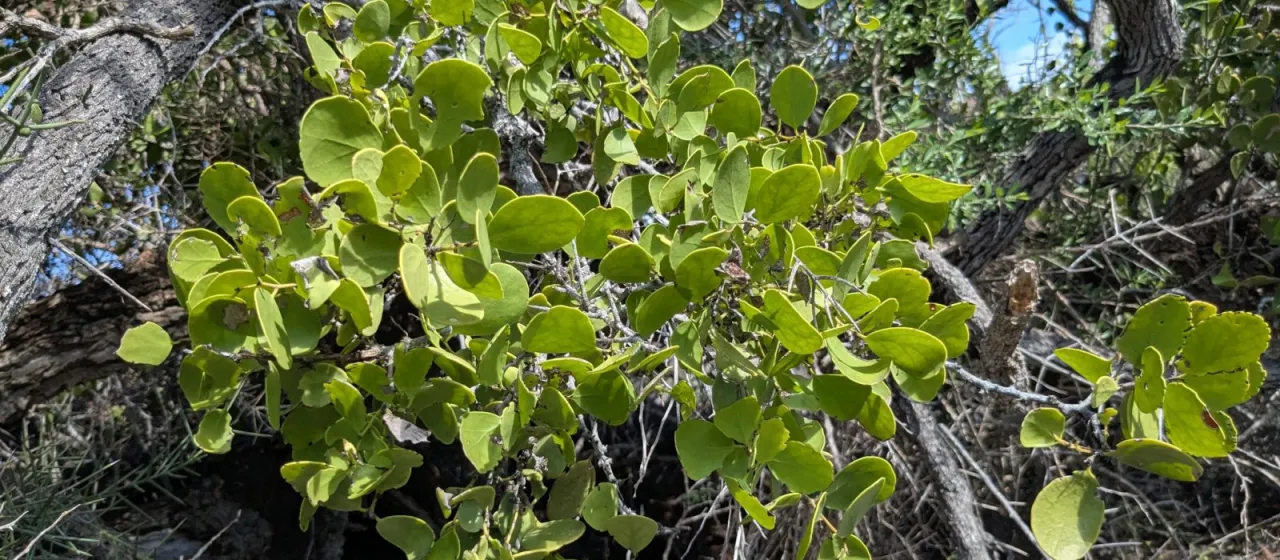
Description
Maytenus orbicularis is a woody perennial plant belonging to the Celastraceae family. Often manifesting as a dense shrub or a small tree, this species is noted for its ability to thrive in harsh environments, displaying remarkable resilience to arid conditions and nutrient-poor soils characteristic of its native habitat.
The plant originates from South America, with its primary distribution range extending across parts of Argentina and Paraguay. It is typically found in dry forest ecosystems and rocky terrains. Its evolutionary history has endowed it with specific physiological traits that allow it to conserve water and survive seasonal variations in precipitation.
Botanically, Maytenus orbicularis is identified by its distinctive rounded leaves, which possess a leathery texture—an adaptation to minimize transpiration. The plant's bark and foliage are known to contain various bioactive secondary metabolites. The flowers are small, often greenish or yellowish, providing a subtle appearance against the foliage.
Agricultural success with this crop depends heavily on soil selection. It strictly requires well-drained soil; waterlogged conditions are fatal to the plant. In a nursery setting, propagation is typically achieved through seeds, which may require stratification. Once established, the plant demonstrates high durability, though it appreciates protection from extreme frost during its juvenile stage.
The economic value of Maytenus orbicularis is primarily rooted in the pharmaceutical and ethnobotanical sectors. Researchers are particularly interested in its triterpenoid content for potential therapeutic applications. Regarding pests, the plant is relatively hardy, though aphids and spider mites can occasionally affect greenhouse-grown specimens, requiring standard integrated pest management protocols.
- Drought tolerance features.
- Requirement for excellent drainage.
- Low nutritional input needs.
- Sensitivity to soil salinity.