
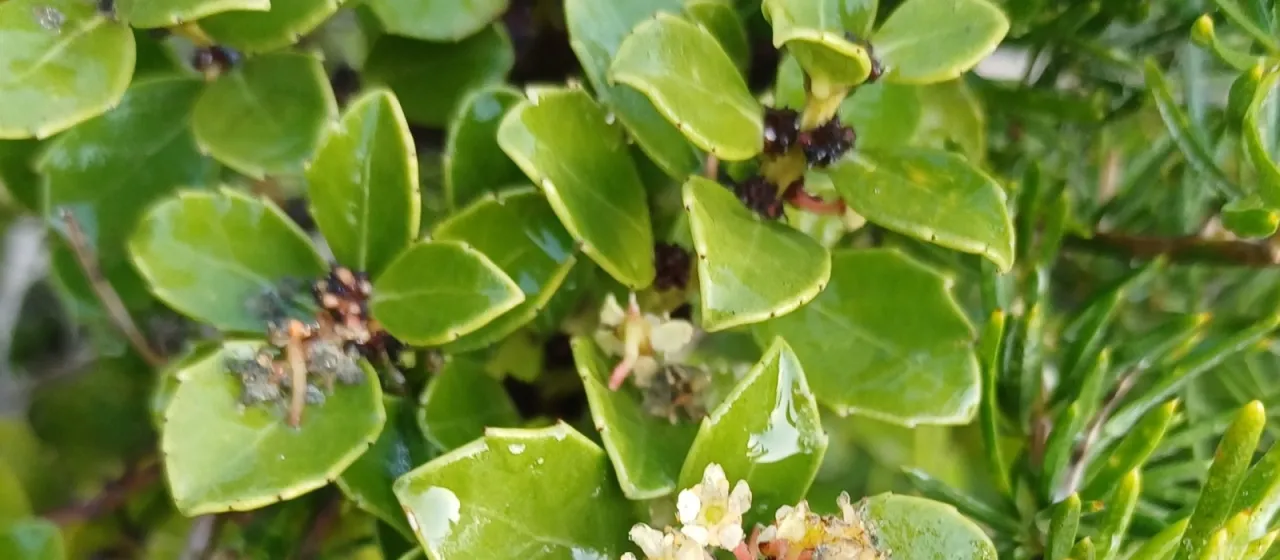
Description
Maytenus procumbens is an evergreen woody shrub species belonging to the Celastraceae family. It is recognized for its adaptability to specific maritime environments, developing into dense, low-growing vegetation clusters that serve as a natural soil binder in its native coastal habitats.
The plant originates from Southern Africa, where it thrives in coastal zones characterized by temperate climates and consistent moisture levels. Its natural distribution is largely defined by its limited tolerance to freezing temperatures, making it a specialized crop for regions with mild winters and high humidity levels.
Botanically, Maytenus procumbens is defined by its thick, leathery leaves that are adapted to minimize water loss. The growth habit is typically prostrate or sprawling, which allows the plant to spread across soil surfaces efficiently. It produces inconspicuous flowers and small, capsule-like fruits that encapsulate seeds, following standard reproduction patterns for the genus.
Agronomic requirements include well-drained, nutrient-moderate soils. It performs best in sites with ample exposure to light, provided there is protection from extreme, dehydrating winds. Water management is critical; while it requires consistent hydration during the growth phase, it is highly susceptible to root decay if subjected to waterlogged soil conditions.
In terms of хозяйственное (economic) use, the plant is utilized for decorative landscaping, particularly in coastal erosion control and slope stabilization projects. Its unique biological structure makes it an interesting subject for botanical research regarding the phytochemical properties found within the broader Celastraceae family.
Maintenance involves monitoring for common horticultural pests and physiological issues:
- Spider mites, particularly in low-humidity greenhouse environments.
- Scale insects, which can cause foliage yellowing.
- Fungal root pathogens triggered by excessive substrate moisture.
- The need for careful drainage management to prevent dieback.