
Description
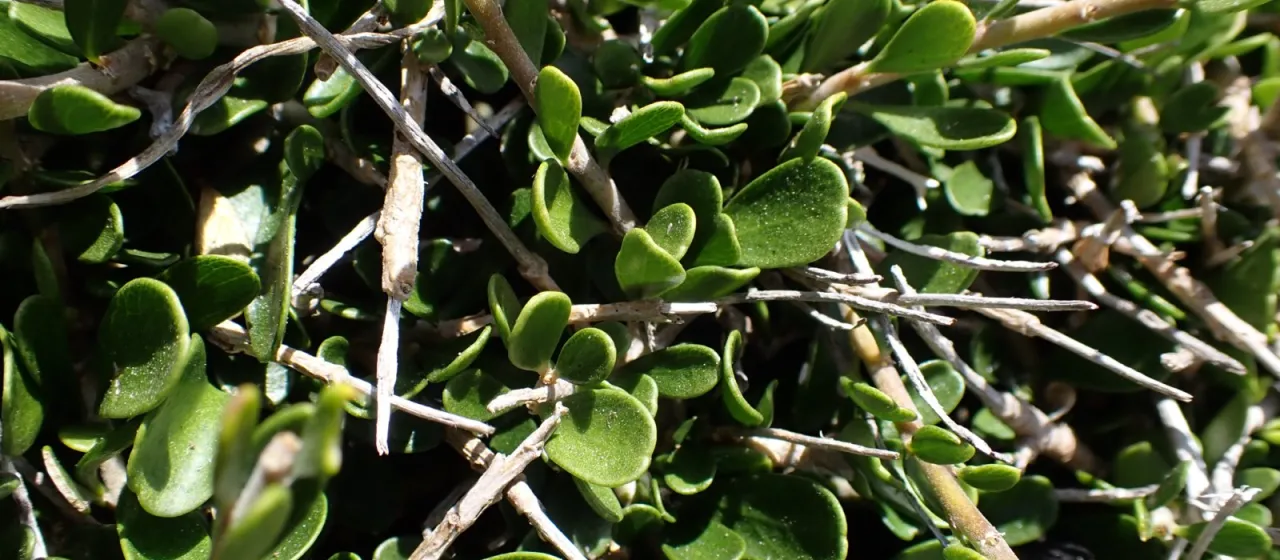
Thick-leaved melicytus (Melicytus crassifolius) is a distinctive evergreen shrub belonging to the Violaceae family. It is widely recognized for its compact, rugged appearance, making it a highly resilient ornamental choice for specific climatic zones where coastal-hardy plants are required.
The plant is native to New Zealand, where it naturally inhabits rocky coastlines and sand dunes. This origin defines its high tolerance to saline environments, high-intensity winds, and low-nutrient substrates. In cultivation, it thrives best in regions that mirror these temperate, maritime conditions.
Botanically, this species is defined by its slow growth rate and rigid, leathery leaves designed to minimize water loss. The shrub architecture is typically prostrate or mound-forming. It produces small, inconspicuous flowers, followed by decorative berries that provide seasonal interest in late autumn and winter months.
Cultivation requirements focus heavily on soil drainage and exposure. The plant does not tolerate waterlogged conditions, which can lead to rapid root decay. A sunny position is essential for maintaining a dense, compact form; shade-grown specimens tend to become leggy and less resilient to environmental stressors.
In terms of agricultural and horticultural use, it is a staple in xeriscaping and coastal landscape architecture. While it is generally robust, growers must watch for pests such as aphids or scale insects that can infest the dense foliage. Proper pruning and maintaining good airflow are the best preventive measures against fungal pathogens in humid weather.