
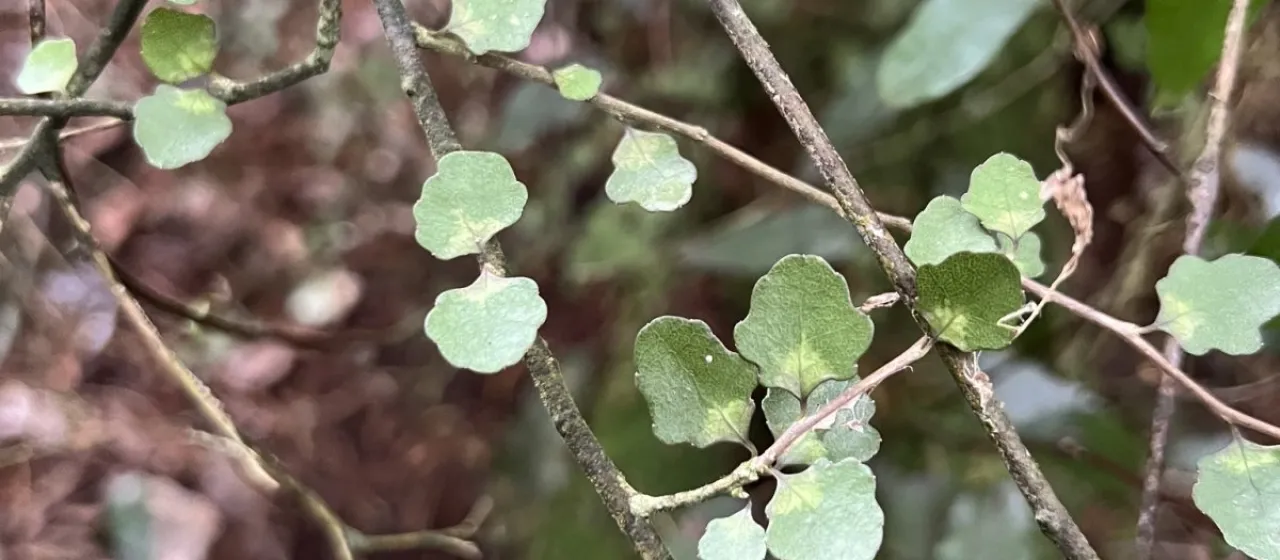
Description
The swamp mahoe (Melicytus micranthus) is a distinctive shrub belonging to the Violaceae family. Native to New Zealand, this plant is well-regarded for its dense, divaricating growth habit, where branches interlace to form a complex, tangled structure. It typically grows as a large shrub or a small tree, reaching heights of up to 5 meters in its natural forest habitat.
Originating from the lowlands of New Zealand's North and South Islands, this species is typically found in swampy or moist forest margins, which accounts for its common name. The plant is perfectly adapted to the cool, humid, and temperate climate of its home range, thriving in environments that provide consistent soil moisture and shelter from harsh, desiccating winds.
Botanically, Melicytus micranthus is characterized by its thin, alternate, and finely serrated leaves. During the spring season, the shrub produces tiny, fragrant flowers that range from greenish-yellow to white. These are followed by small, succulent fruits that transition from white to purple as they ripen, providing an essential food source for native bird populations.
In terms of cultivation, the swamp mahoe requires fertile, well-draining soil with a pH ranging from neutral to slightly acidic. While it is versatile enough to grow in both partial shade and full sun, it performs best when the root system remains cool and consistently moist. Mulching is highly recommended to mimic the forest floor conditions and retain ground moisture during drier periods.
The primary use of the swamp mahoe is in restoration ecology and ornamental landscaping. Because of its dense, compact nature, it is an excellent candidate for hedging or as a structural element in native-focused gardens. Its hardiness and aesthetic qualities make it a popular choice for gardeners seeking to introduce authentic New Zealand flora into their plant collections.
- Excellent tolerance for regular pruning and shaping.
- High resilience to local pests and diseases when healthy.
- Crucial role in supporting local avian biodiversity.
- Adaptable to diverse forest-edge conditions.