
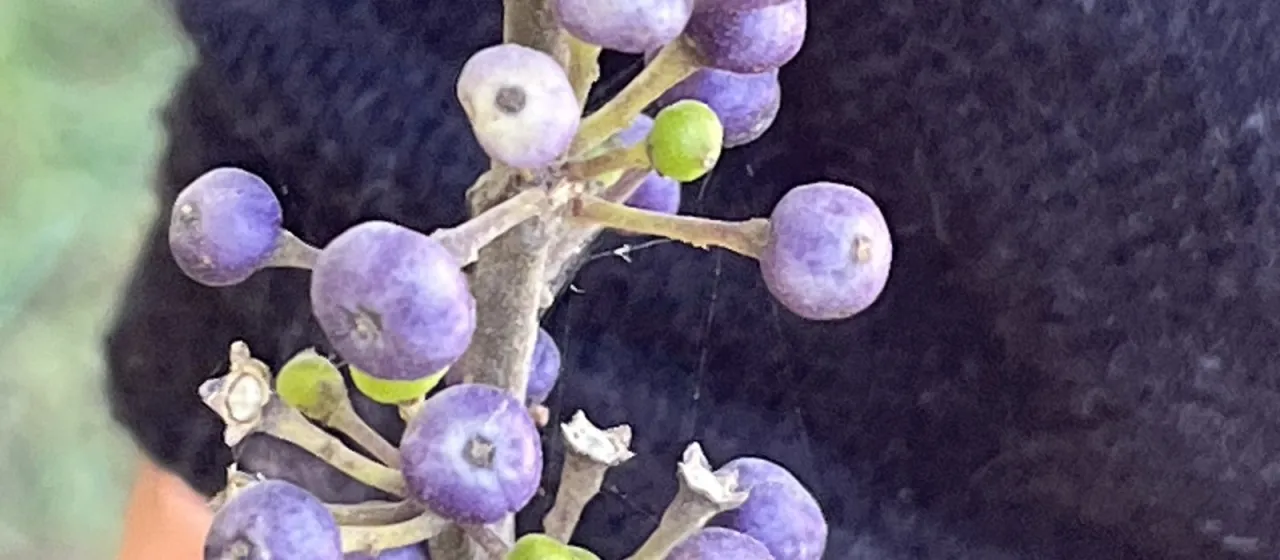
Description
Melicytus ramiflorus, commonly referred to as Mahoe or Whiteywood, is a fast-growing, evergreen tree or shrub within the Violaceae family. Native to New Zealand, this species is highly valued for its role in secondary succession, serving as a foundational component in restoring native forest cover and stabilizing fragile landscapes.
In terms of distribution and ecology, Mahoe is one of the most common trees found across New Zealand's lowlands and mountain forests. It is an extremely adaptable species, thriving in various soil types including alluvial, volcanic, and clay-rich soils. Its ability to tolerate wind and diverse light conditions makes it a robust candidate for agroforestry projects aimed at landscape protection.
Botanically, Melicytus ramiflorus is characterized by its smooth, pale grey bark and distinctively serrated, lance-shaped leaves. The species is dioecious, meaning male and female flowers are borne on separate trees. In the spring and summer, the plant produces clusters of small, fragrant yellowish flowers, followed by tiny, dark purple berries that are highly nutritious for endemic avian fauna.
Agricultural and horticultural requirements focus on ensuring deep, well-draining soil and adequate space for canopy expansion. While mature specimens are quite drought-tolerant, young plants require consistent irrigation to establish a deep root system. Pruning is typically performed to maintain structural integrity, especially when used in boundary plantings or as a shelterbelt component.
Primary хозяйственное uses for this crop include:
- Development of wildlife corridors and bird-friendly habitats.
- Shelterbelts and windbreaks to protect horticultural and field crops.
- Large-scale revegetation and erosion control on hillside agricultural zones.
- Ornamental use in urban landscaping and native gardening projects.
Regarding health management, Mahoe is relatively resilient but can be susceptible to fungal infections in poorly drained soils or dense, unventilated stands. Pest management typically involves monitoring for common leaf-eating insects. Sustainable cultivation practices, such as mulching and avoiding chemical pesticides, are recommended to preserve the local biodiversity and long-term health of the plantation.