
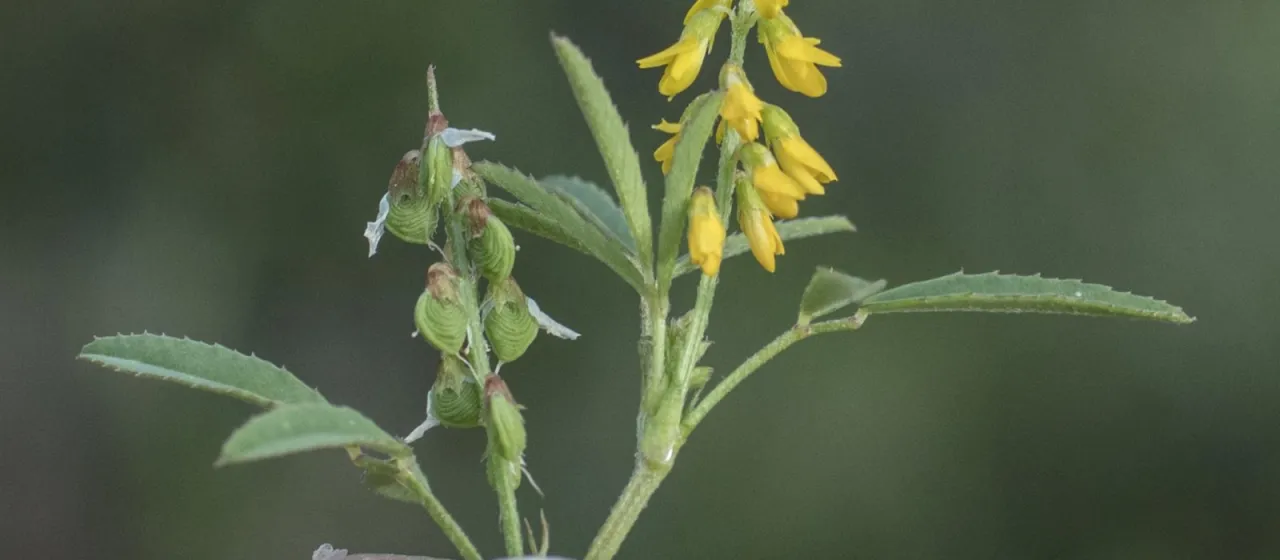
Description
Furrowed melilot (Melilotus sulcatus Desf.) is an annual herbaceous plant belonging to the Fabaceae family. This crop is highly regarded in sustainable agriculture for its remarkable ability to thrive in harsh environments and its efficacy in nitrogen fixation, which contributes to soil fertility.
The native distribution of this species spans the Mediterranean basin, Western Asia, and Northern Africa. It is well-adapted to semi-arid regions, demonstrating significant tolerance to drought conditions and saline soils, making it a valuable candidate for land restoration projects in challenging climates.
Botanically, the plant is characterized by its spreading or erect stems, trifoliate leaves, and yellow racemes. Its defining feature is the morphology of the pods, which display distinct transverse ridges or a furrowed, wrinkled surface, serving as the primary diagnostic trait for the species.
Agronomic requirements are generally low, as the plant does not require high-input fertilizer regimes. It prefers well-drained, sandy or loamy soils. While it handles drought effectively, it is sensitive to waterlogged conditions, making proper soil drainage essential for optimal biomass production.
The primary agricultural applications include:
- Provision of forage in arid and semi-arid grazing lands.
- Use as a green manure cover crop to improve soil structure and nutrient content.
- Support for apiculture as a nectar-rich source for honeybees.
- Phytoremediation and erosion control on degraded or saline landscapes.
The plant can be susceptible to common leguminous diseases such as root rot and leaf spot pathogens, particularly if grown in areas with poor drainage or high humidity. In terms of insect pressure, it is occasionally targeted by weevils, which may cause damage to both foliage and the root nodules of the crop.