
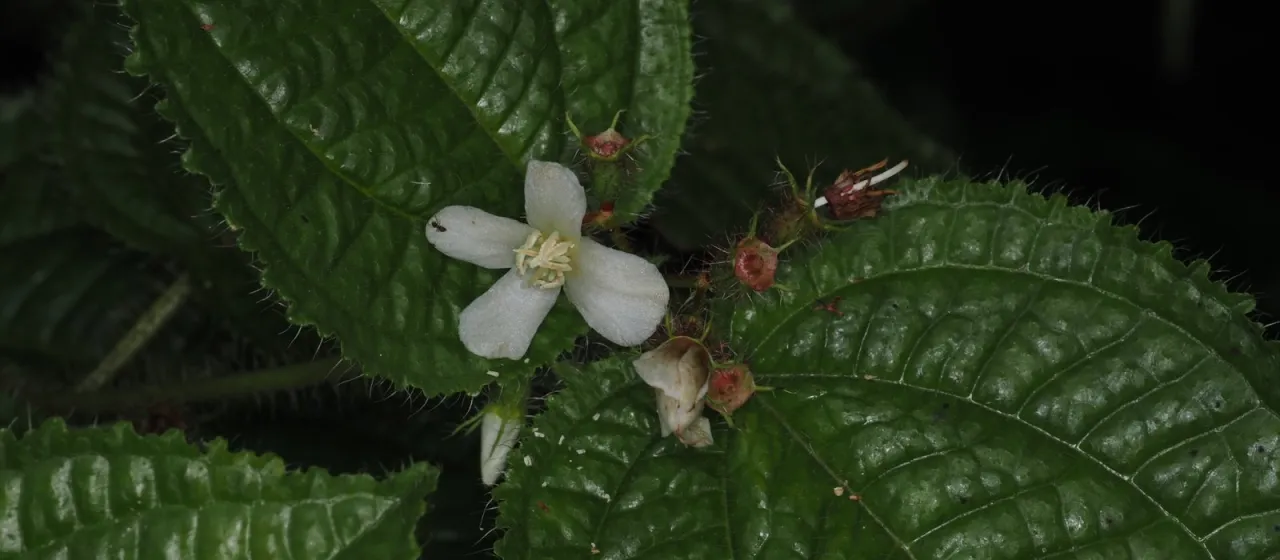
Description
Miconia crenata is a perennial evergreen shrub belonging to the Melastomataceae family. It is a robust tropical species that is scientifically significant due to its high reproductive potential and adaptability. In many agricultural regions, it is categorized as a management challenge rather than a traditional crop due to its invasive behavior.
The species is native to the tropical forests of Central and South America. Over time, it has established itself in various tropical environments across the globe, particularly in areas with high annual rainfall and consistent temperatures. Its successful spread is attributed to its ability to colonize disturbed lands and compete effectively with indigenous flora.
Botanically, Miconia crenata is distinguished by its opposite, simple leaves with prominent longitudinal venation and serrated (crenate) margins. The plant produces small, fragrant flowers arranged in terminal panicles, followed by berry-like fruits. These fruits are readily consumed by local fauna, which facilitates the wide dispersal of seeds, often leading to unchecked expansion.
Successful growth requires a stable, warm climate with high humidity. Soil preference includes well-drained, nutrient-rich substrates, though the plant is known to survive in a variety of soil types. Agricultural management focuses on population control: maintaining clear boundaries around production areas and preventing the shrub from entering pastures or cultivated field plots.
- Requires consistent moisture throughout the growing season.
- Sensitive to low temperatures and frost.
- Capable of rapid biomass production.
- Can be suppressed through manual pruning or integrated weed management.
The economic utility of Miconia crenata is largely overshadowed by its status as a nuisance species. While it may serve as an ornamental plant in some botanical contexts, agricultural professionals prioritize the prevention of its spread. Effective management involves monitoring early signs of infestation and ensuring that field margins are kept clear of mature seed-bearing specimens.