
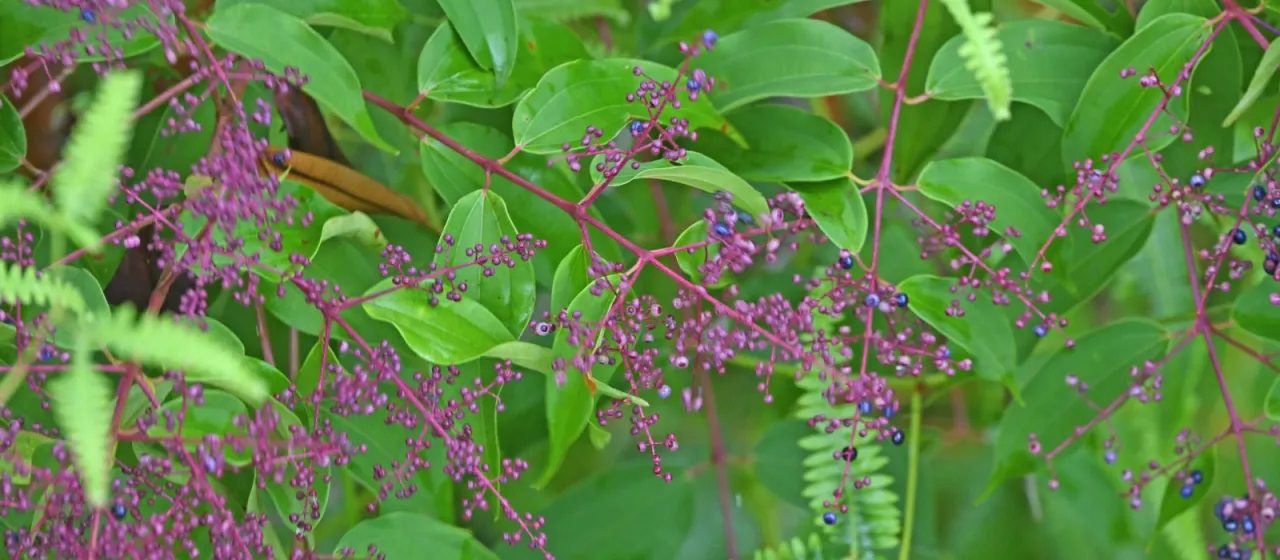
Description
Miconia minutiflora is a woody plant belonging to the Melastomataceae family, a group well-known for its diverse and ecologically significant species throughout the tropical regions of the world. This species is recognized for its architectural role in the understory of neotropical forests.
The native range of this plant extends across the tropical regions of Central and South America. It typically thrives in humid environments, including lowland rainforests and premontane areas. Its ability to colonize gaps in the canopy makes it an important species for ecological succession and the maintenance of forest structure.
Botanically, Miconia minutiflora is characterized by its opposite, often coriaceous leaves with prominent acrodromous venation. The inflorescences are panicles composed of numerous small, delicate flowers, which give the species its scientific name. These flowers provide nectar for various pollinators, while the resulting berries are dispersed by local avian fauna.
In terms of environmental requirements, the plant demands consistent moisture and stable temperatures characteristic of the tropics. It prefers well-drained, acidic, and nutrient-rich soils. While not widely cultivated as a commercial crop, it is highly valued in tropical horticulture and agroforestry projects for its ability to improve soil structure and provide habitat for biodiversity.
Pest and disease management for this species is largely dictated by its natural resilience in wild habitats. Common issues may include localized fungal infections in overly dense stands, but the plant is generally hardy. Ongoing research focuses on its potential for carbon sequestration and its utility in reforestation initiatives within its native range.
- Key species for tropical forest restoration.
- Significant provider of food resources for local fauna.
- Adapts well to diverse light conditions in the understory.
- Resilient to many typical environmental stressors.