
Description
Miconia nervosa is a notable evergreen shrub belonging to the Melastomataceae family. This plant is recognized for its striking foliage, characterized by distinctively impressed veins that create a textured, ribbed appearance on the surface of the leaves, making it a sought-after species for botanical collections.
The plant originates from the tropical rainforests of Central and South America. Within its native range, it thrives in the shaded understory, where it benefits from a stable microclimate, high atmospheric humidity, and nutrient-rich forest litter that provides a constant supply of organic matter for the root system.
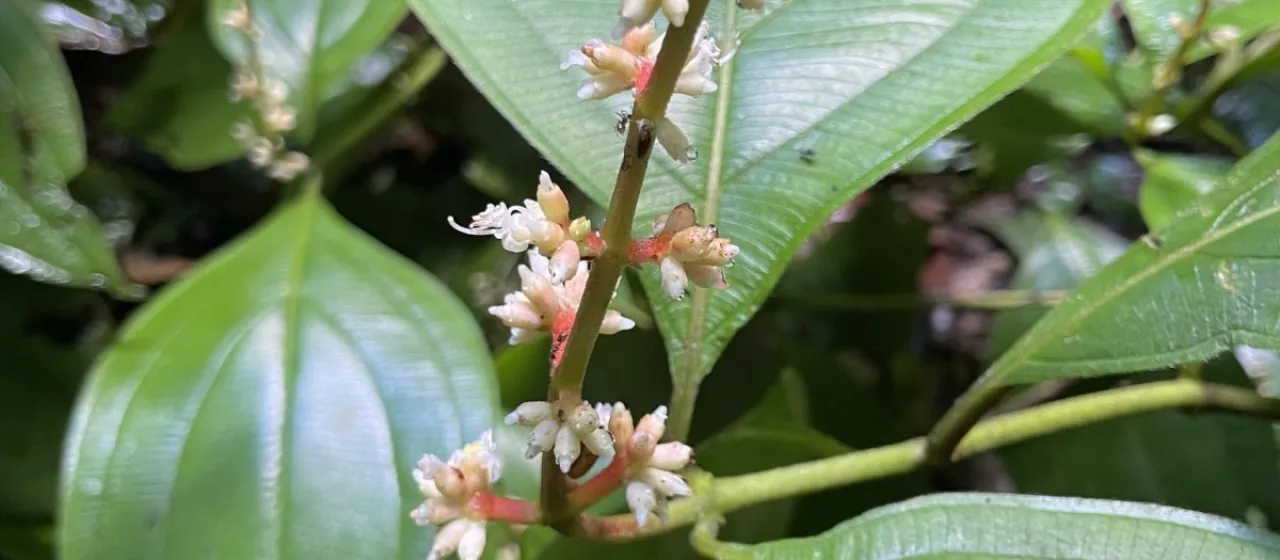
Botanically, it typically grows as an upright shrub or small tree. Its leaves are opposite, elliptic, and have a leathery texture. The inflorescences are composed of numerous small flowers, which later develop into small, fleshy berries. These fruits serve as a critical food source for various avian species within its natural habitat.
Cultivation requirements for this species are specific: it demands high humidity and temperatures that do not fluctuate significantly. The soil must be well-drained yet moisture-retentive, ideally enriched with compost or peat. Excessive direct sunlight should be avoided to prevent leaf scorching, as the plant is naturally adapted to filtered light conditions.
In terms of practical use, Miconia nervosa is primarily valued for its ornamental appeal in tropical landscape architecture. It is often used to add structural interest to garden beds and greenhouse displays. Growers should monitor for common tropical pests such as aphids or scale insects and ensure adequate air circulation to prevent fungal pathogens from affecting the foliage.
- Optimal growth in partial shade
- Maintenance of high humidity levels
- Requirement for acidic, nutrient-rich soil
- Protection against frost and cold drafts