
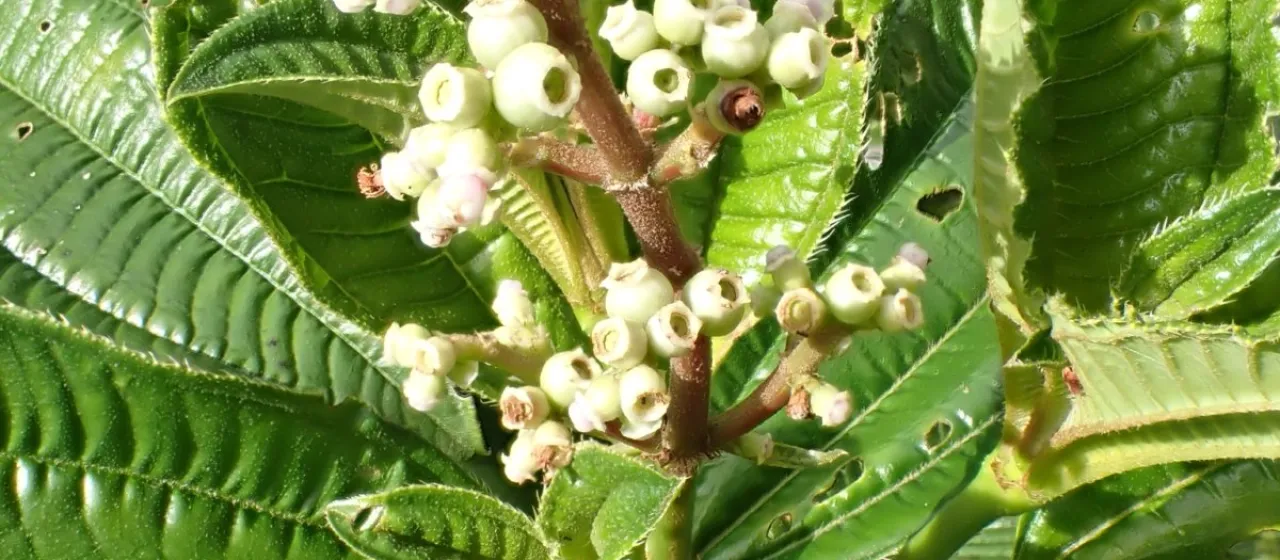
Description
Miconia racemosa is a perennial evergreen shrub belonging to the diverse Melastomataceae family. Known for its aesthetic appeal and ecological role, this species is a typical representative of tropical understory vegetation, often utilized in botanical collections for its unique structural characteristics.
Originating from the tropical zones of Central and South America and the Caribbean, the plant thrives in humid environments. Its natural habitat includes dense forests where it benefits from the shelter provided by taller canopy trees, which shield it from direct, intense sunlight throughout the day.
Botanically, it is distinguished by its opposite, prominently veined leaves and its inflorescences, which grow in racemes. The small, often inconspicuous flowers develop into succulent berries. These fruits are generally safe for wildlife consumption and serve as a crucial food source for various bird species in their native habitats.
In terms of cultivation, Miconia racemosa requires a stable environment with high atmospheric humidity and consistent temperatures. The ideal soil profile should be acidic, moisture-retentive, yet possess excellent drainage to prevent root rot. Regular fertilizing with organic matter promotes healthy foliage development.
While not a major commercial crop, the plant holds value in ornamental landscaping and environmental restoration projects. Common agricultural challenges include the management of pests like mealybugs and spider mites, particularly in greenhouses. Proper ventilation and soil moisture control are essential to prevent fungal pathogens that often attack the root system.
- Thrives in filtered or partial shade.
- Requires acidic, well-draining soil.
- Highly sensitive to frost and extreme cold.
- Essential for supporting local bird biodiversity.