
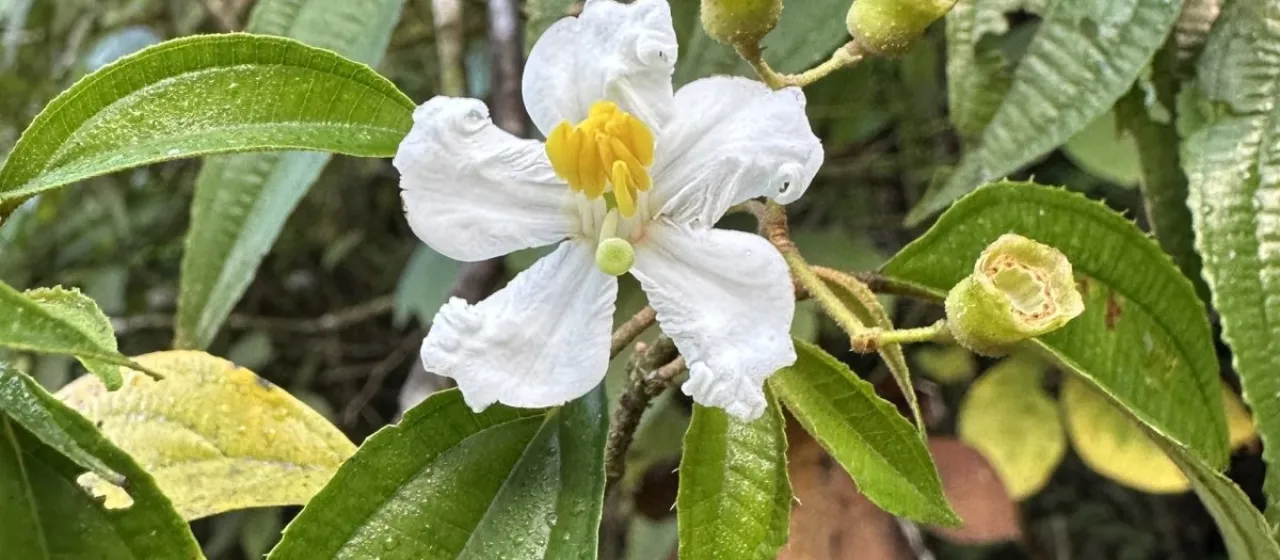
Description
Miconia schlimii is a perennial woody plant belonging to the Melastomataceae family, a diverse group known for its distinct leaf venation patterns. Within this family, the genus Miconia is one of the largest and most ecologically significant, containing numerous species that adapt well to humid tropical environments.
The plant originates from the mountainous tropical forests of South and Central America. Its native habitat is characterized by high annual precipitation, stable temperatures, and high humidity. Because it grows naturally in the understory of dense forests, it has adapted to low-light conditions and nutrient-rich, acidic forest soils.
Botanically, Miconia schlimii features evergreen, opposite leaves with prominent arcuate veins running from the base to the apex, a diagnostic trait of the Melastomataceae family. The plant produces delicate inflorescences that carry small, often fragrant flowers with prominent stamens, which contribute to its ornamental appeal in botanical collections.
Agricultural requirements for Miconia schlimii are quite specific. It necessitates a well-draining, peat-based soil substrate with a slightly acidic pH. The plant requires a consistent high level of air humidity and cannot tolerate complete drying out of the root ball. Furthermore, it should be kept away from direct, harsh sunlight to prevent scorching of the sensitive foliage.
The primary use of Miconia schlimii is in ornamental horticulture, specifically for greenhouse displays and indoor collections in temperate regions. While it is not a traditional field crop, managing this plant involves monitoring for common pests like spider mites and mealybugs, as well as preventing root rot through careful watering techniques and proper soil aeration.