
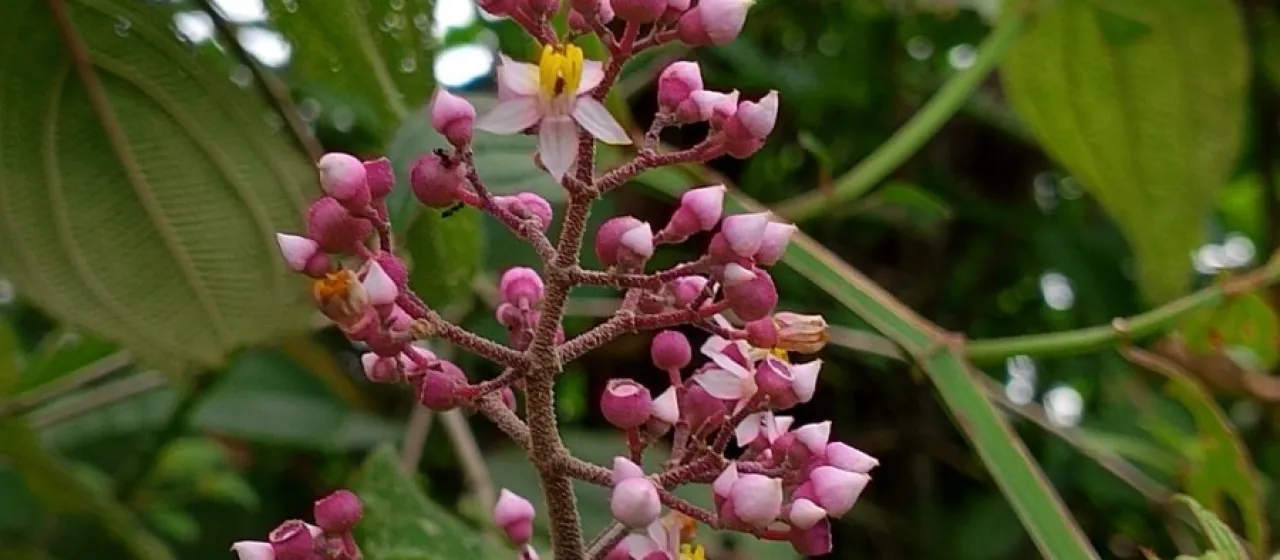
Description
Miconia subcrustulata is a botanical species belonging to the Melastomataceae family, a group well-known for its impressive leaf venation and ornamental value. As a woody shrub or small tree, it naturally occurs in the understory of tropical forests. In an agricultural and horticultural context, it is recognized as a specialty plant primarily studied for its unique physiological adaptations to tropical light environments.
The native range of Miconia subcrustulata covers humid tropical regions in the Americas. It thrives in ecosystems characterized by high relative humidity and minimal temperature fluctuations. These regions provide the stable, warm climate that the plant requires to maintain its structural integrity and photosynthetic efficiency throughout the year.
Botanically, the species is defined by its distinctively veined, often coriaceous (leathery) leaves which display the classic acrodromous venation pattern typical of the family. The plants produce small, clustered inflorescences that develop into berry-like fruits. The structural complexity of the leaves allows the plant to maximize light capture in the dense, low-light conditions of the forest floor.
Cultivation requires a specific set of parameters, starting with a well-draining, nutrient-rich, and slightly acidic substrate. Regular irrigation is necessary, but the soil must never become waterlogged, as the root system is highly susceptible to hypoxia and subsequent fungal infections. Providing a consistent ambient temperature and protecting the plant from cold drafts are critical for successful greenhouse maintenance.
While primarily of interest to botanical gardens and niche plant collectors, the species requires careful management to prevent common health issues. Key points of concern include:
- Infestations of spider mites that thrive in low-humidity environments.
- Root rot pathogens that emerge from stagnant water conditions.
- Sensitivity to high-intensity, direct solar radiation which can scorch the foliage.