
Description
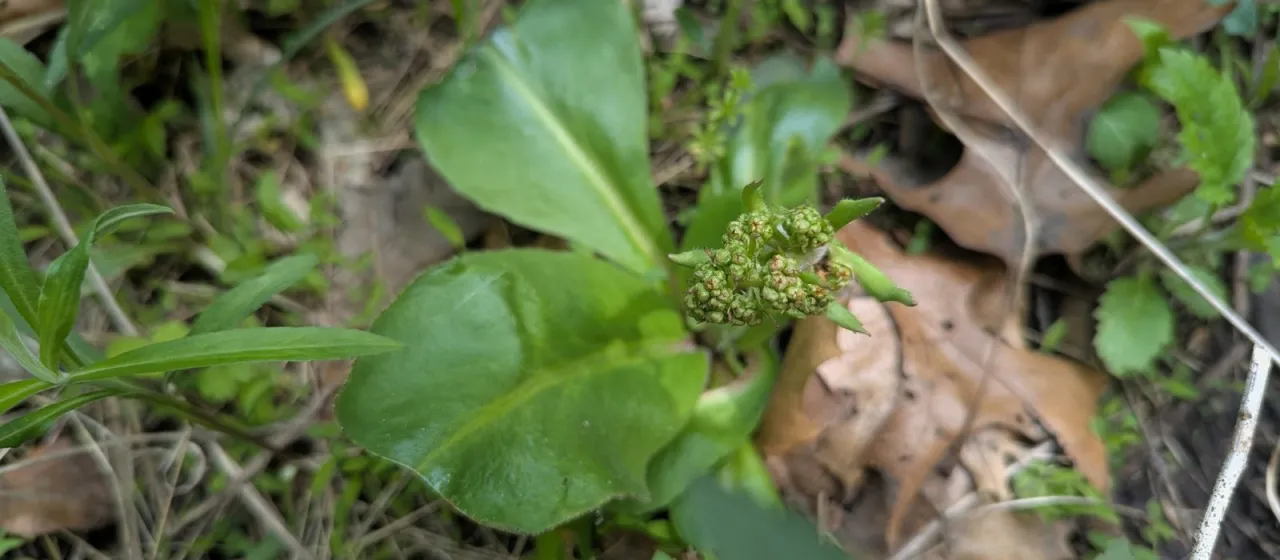
Swamp saxifrage (Micranthes pensylvanica) is a herbaceous perennial belonging to the Saxifragaceae family. While not a conventional field crop, it is a highly valued species in specialized horticulture and native plant landscaping. It is characterized by a basal rosette of large, lanceolate leaves and a tall, sturdy flowering scape that rises above the foliage in the spring and early summer.
The plant is native to eastern North America, where it thrives in wetlands, fens, and along riverbanks. Its evolutionary history in waterlogged habitats has made it highly dependent on consistent soil moisture. In an agricultural or gardening context, it is considered an indicator species for nutrient-rich, moist environments, and its presence signals high environmental quality.
Botanically, Micranthes pensylvanica is known for its deep, fibrous root system that survives dormant periods well. The inflorescence consists of numerous small flowers, typically greenish-yellow or off-white, arranged in a congested to open panicle. Seeds are minute and require stratification (cold exposure) to trigger germination, which is a key technical aspect of its propagation.
Regarding agrotechnical requirements, swamp saxifrage thrives in partial shade with constant soil moisture. It is essential to maintain a soil pH that is near-neutral to slightly acidic, rich in organic matter. Unlike typical field crops, it does not require intensive fertilization, but it does demand stable hydraulic conditions; drying out the soil for even a short period can lead to rapid wilting and plant stress.
The primary economic use for this plant is in ornamental horticulture, specifically for wetland restoration projects and rain gardens. Typical phytosanitary concerns include infestation by slugs and snails, which can significantly damage leaf tissue. Additionally, in poorly aerated or cold, waterlogged soils, the plant may become susceptible to fungal pathogens causing root rot.