
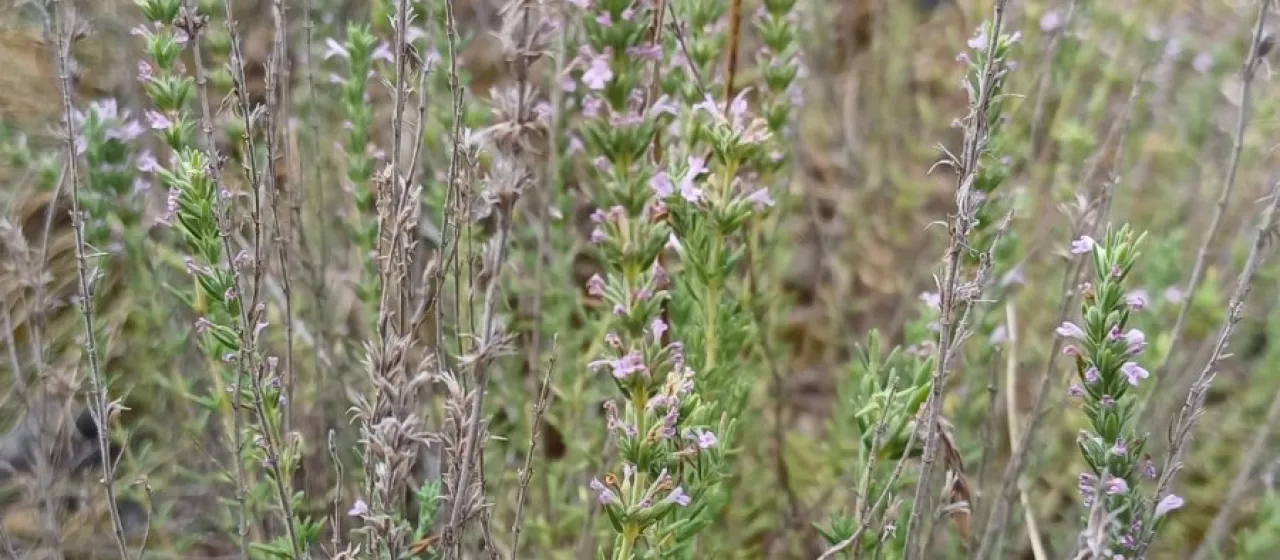
Description
Micromeria juliana is a perennial herbaceous plant belonging to the Lamiaceae family. It is a hardy, low-growing shrublet that is highly valued for its aromatic foliage, which is rich in essential oils and carries a scent reminiscent of savory or wild thyme.
The plant is native to the Mediterranean basin, extending across Southern Europe and parts of North Africa and Western Asia. It typically thrives in arid, rocky environments, limestone cliffs, and dry garrigue landscapes, demonstrating exceptional tolerance to low-nutrient soils and drought conditions.
Botanically, it features small, opposite leaves often covered in glandular trichomes. The stems are semi-woody at the base, and during the blooming season, the plant produces dense, spike-like inflorescences with small flowers, typically ranging from white to pale pink or lavender, which are highly attractive to pollinators.
The agronomic requirements for Micromeria juliana focus on perfect drainage and full sun exposure. It is a classic xerophytic plant that struggles in heavy, waterlogged soils. In cultivation, it requires minimal fertilization, as high nutrient levels can cause the plant to grow too rapidly, leading to weaker stems and reduced concentration of aromatic compounds.
Economic and practical applications for this crop include:
- Culinary use: As a fragrant herb for seasoning meats, stews, and herbal teas.
- Aromatherapy: Extraction of essential oils for fragrance and therapeutic applications.
- Ornamental gardening: Used extensively in rock gardens and xeriscaping projects for its drought resistance.
While the plant is generally pest-resistant due to its essential oil content, it is susceptible to fungal issues like root rot if the soil moisture levels are not carefully managed. Proper spacing and airflow are the most effective preventive measures against diseases in commercial production fields.