
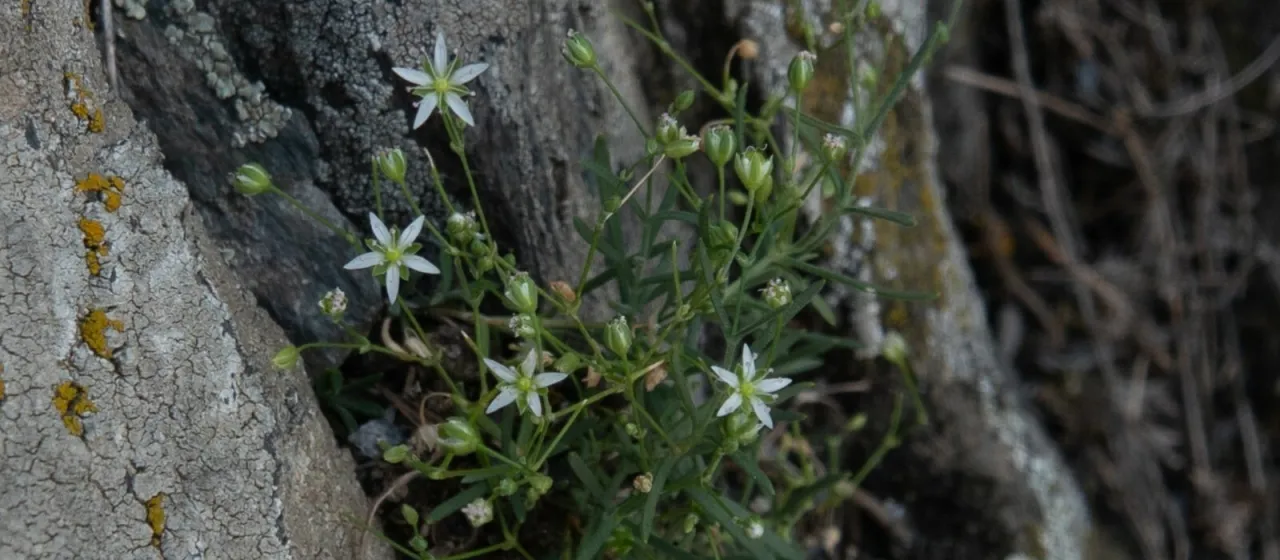
Description
Moehringia grisebachii is a perennial herbaceous plant belonging to the Caryophyllaceae family. This species is highly specialized, having evolved to thrive in the harsh environments of the Balkan mountain ranges, making it a significant subject for botanical research and alpine flora conservation.
The geographic distribution of this species is confined to specific high-altitude regions, primarily in the Balkan Peninsula. It is typically found in craggy environments, limestone cliffs, and stony slopes, where it manages to survive in nutrient-poor substrates by utilizing its specialized root system to anchor within rock crevices.
Botanically, the plant is characterized by its cushion-forming growth habit, which acts as a survival mechanism against extreme wind and temperature fluctuations. The leaves are small, narrow, and often rigid, designed to withstand dehydration. The inflorescences consist of small white flowers that emerge during the short growing season typical of high-mountain elevations.
Cultivation of Moehringia grisebachii requires specific environmental conditions. It demands well-drained, lime-rich mineral soils and excellent air circulation to mirror its natural habitat. It does not tolerate heavy, waterlogged, or nutrient-rich organic soils, which can be fatal to its delicate root system.
- Requires full sun exposure
- Needs excellent drainage (rock garden mix)
- Sensitive to excessive irrigation
- Tolerant to cold temperatures
- Suitable for alpine rockeries
In terms of health management, this plant remains largely free from common agricultural pests. Potential issues usually stem from improper environmental conditions, such as fungal pathogens resulting from stagnant moisture. It is primarily utilized in niche horticultural settings and as a subject for scientific study of high-altitude plant adaptations.