
Description
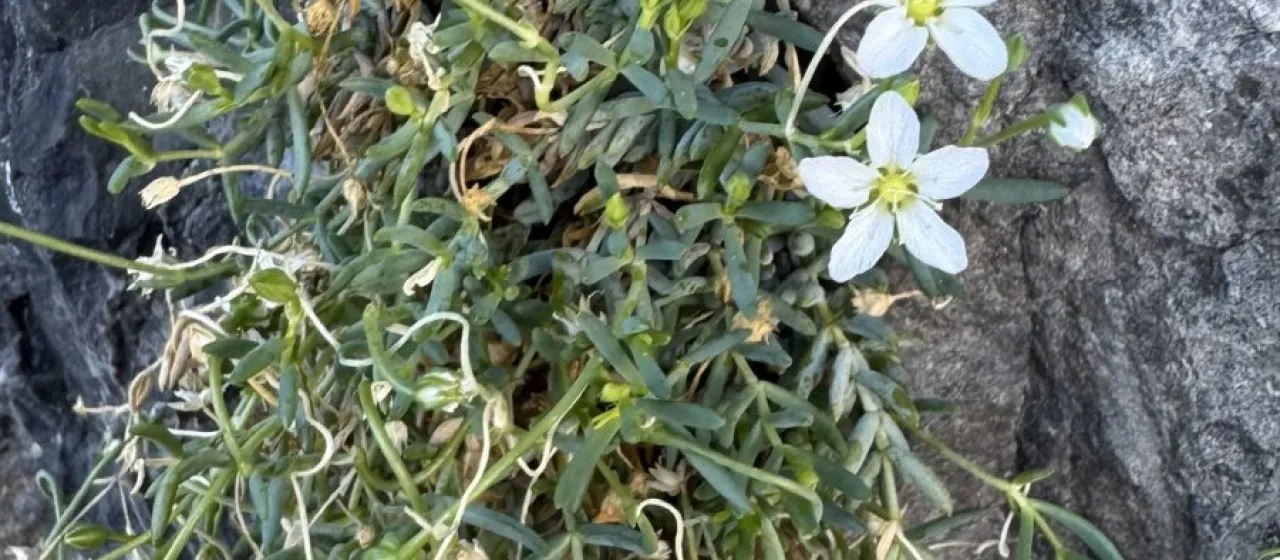
Moehringia insubrica is a perennial herbaceous plant belonging to the Caryophyllaceae family. Known for its compact, cushion-forming growth habit, this species is highly regarded in horticulture as a specialized subject for alpine rock gardens and crevice planting, representing a unique botanical interest for alpine plant enthusiasts.
The plant originates from the mountainous regions of the Southern Alps, specifically the Insubrian area, where it thrives in limestone rock crevices and stony screes. This natural habitat defines its biological resilience and physiological requirements, making it a challenging but rewarding species to cultivate in garden settings that mimic high-altitude conditions.
Botanically, it features small, opposite, narrow leaves and delicate, white-petaled flowers that emerge above the low-growing foliage. The root system is specialized for anchoring into rocky substrates, which dictates that the plant requires significant mineral content in its growing medium to remain healthy and vibrant throughout the growing season.
Agricultural and horticultural management for this species necessitates specific soil parameters. The medium must be highly permeable, utilizing gravel or grit-based mixes to prevent water stagnation, which is fatal to the plant. It prefers a neutral to alkaline pH, consistent with its limestone-origin, and requires excellent airflow to prevent the development of root rots and fungal pathogens.
The primary use of Moehringia insubrica is in specialized ornamental landscaping, particularly in troughs or alpine houses where moisture can be strictly controlled. While generally robust in the correct environment, the plant is susceptible to pests like aphids if stressed, and careful monitoring for root rot is essential during humid summer months to ensure the longevity of the plant population.