
Description
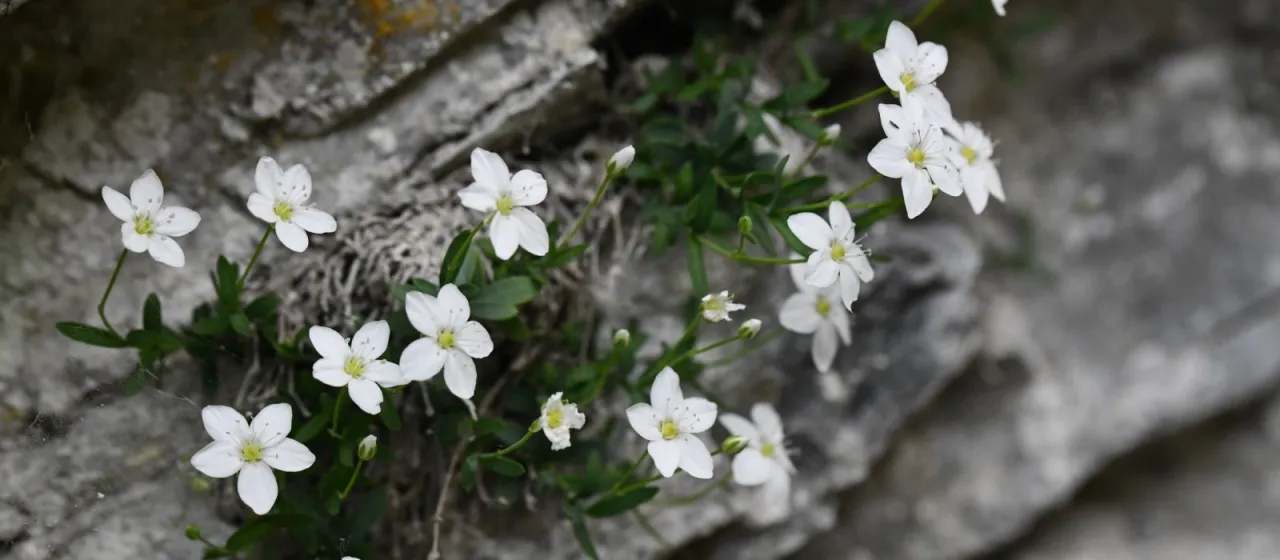
Moehringia lebrunii is a rare herbaceous perennial plant belonging to the Caryophyllaceae family. Botanically, it represents a compact species highly adapted to the harsh conditions of high-mountain ecosystems, making it a subject of significant interest for botanical researchers and collectors of rare alpine flora.
The natural distribution of this species is quite restricted, primarily found in the mountainous regions of Europe, specifically within France. The plant thrives in rocky substrates, limestone outcrops, and subalpine belts, where environmental conditions involve sharp temperature fluctuations, high humidity during snowmelt, and intense solar radiation.
The botanical structure of Moehringia lebrunii consists of a miniature subshrub with narrow opposite leaves and small white or pink flowers arranged in loose inflorescences. Its root system is deep and well-branched, allowing the plant to effectively utilize limited nutrients within rock crevices and to anchor itself securely in unstable soil layers.
Agronomic requirements for this species include replicating its natural habitat by using a well-drained, nutrient-poor limestone substrate amended with gravel. The plant is extremely sensitive to waterlogging; therefore, when grown in gardens or greenhouses, maintaining excellent drainage and providing a cool, stable winter period without sudden thawing is critical for survival.
The economic use of this plant is primarily focused on ornamental horticulture, particularly in rock gardens and alpine rockery landscaping. Diseases and pests are rare in its native environment, but in cultivation, the plant may suffer from fungal infections caused by overwatering or be affected by spider mites in indoor conditions with low air humidity.
- Well-drained soil
- Sunny location
- Moderate watering
- Minimal fertilization