
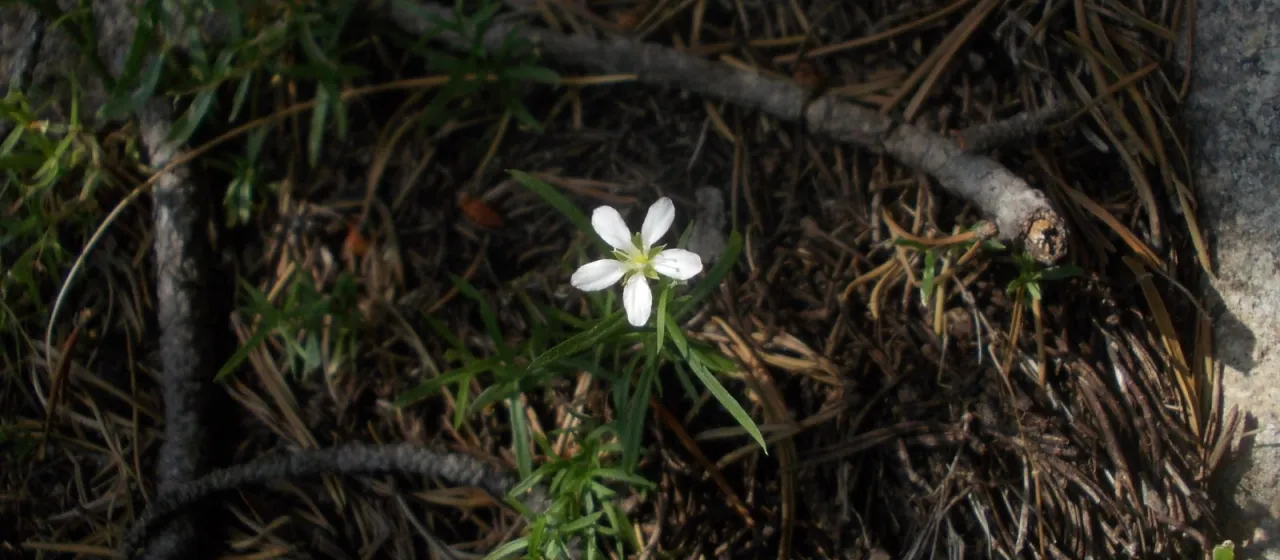
Description
Moehringia pendula is a perennial herb belonging to the Caryophyllaceae family. While not a commercial agricultural crop, it is a significant species in specialized horticulture, particularly valued by enthusiasts of rock garden flora and alpine landscapes for its delicate appearance and resilience.
Native to the mountain ranges of Europe, including the Alps and the Balkans, the plant is naturally adapted to limestone cliffs and rocky crevices. Its distribution is primarily tied to high-altitude ecosystems where the growing season is short and the substrate is largely mineral-based rather than organic.
Botanically, this species is defined by its slender, often pendulous stems and small, lanceolate leaves. The flowers are small, white, and solitary or arranged in loose cymes, typical of the Caryophyllaceae family. Its growth habit allows it to trail over rocky edges, making it an excellent choice for vertical gardening in stone walls.
Cultivation requires careful attention to drainage and soil composition. It thrives in gritty, limestone-rich soils with excellent permeability. The plant does not tolerate high humidity or waterlogged conditions, which can be detrimental to its root system. Therefore, it is best placed in elevated garden sections or specialized rock containers.
- Excellent drainage is essential
- Prefers alkaline soil conditions
- Sun-loving or partial shade placement
- High hardiness in alpine climates
The plant is used primarily for ornamental purposes in rock gardens, scree beds, and stone troughs. Disease resistance is generally high, though crown rot can occur if soil drainage is insufficient. Common pests include slugs and snails, which may graze on the foliage, especially during moist spring conditions, necessitating careful monitoring.