
Description
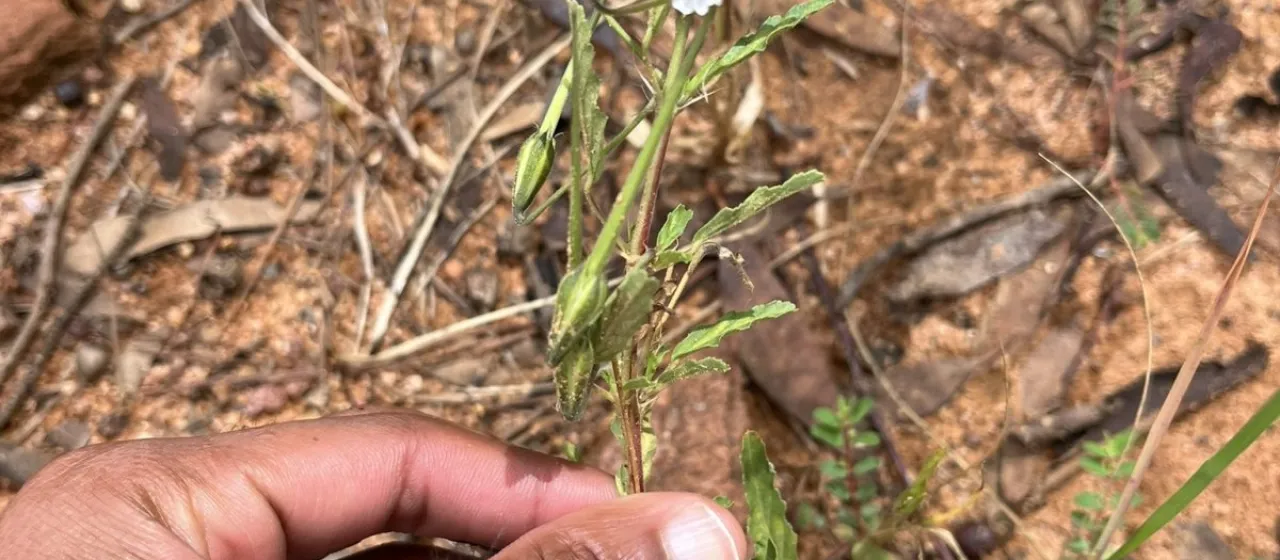
Monsonia angustifolia is a resilient perennial herb belonging to the Geraniaceae family. As an agricultural object, it is recognized for its xerophytic nature, meaning it is highly adapted to arid environments, making it a subject of research for sustainable agriculture in water-scarce regions.
The plant is native to sub-Saharan Africa, where it thrives in savannahs and dry grasslands. Its evolutionary history has endowed it with remarkable mechanisms to cope with extreme heat and unpredictable rainfall patterns, allowing it to persist where standard field crops would fail to establish.
Botanically, Monsonia angustifolia features specialized leaf structures designed to reduce transpiration and a robust taproot system that facilitates survival during drought. The plant typically exhibits a low-growing habit, which protects it from wind damage and excessive moisture loss, while its flowering cycle is tightly linked to seasonal climate cues.
Regarding agrotechnics, successful cultivation requires well-drained, sandy or gravelly soils that mimic its natural habitat. The crop is intolerant to waterlogging, which necessitates careful site selection and the avoidance of heavy clay soils. Low-input management is generally sufficient, as the plant is efficient in nutrient uptake even in soils with low fertility levels.
The primary economic value of Monsonia angustifolia lies in its pharmacological potential. It has long been utilized in traditional medicine for its antimicrobial and anti-inflammatory properties. Ongoing scientific interest aims to standardize the production of this plant for the pharmaceutical industry, focusing on the extraction of high-value compounds that contribute to modern healthcare applications.
- Excellent drought tolerance
- Preference for well-drained soil
- Rich in bioactive secondary metabolites
- Potential for pharmaceutical production