
Description
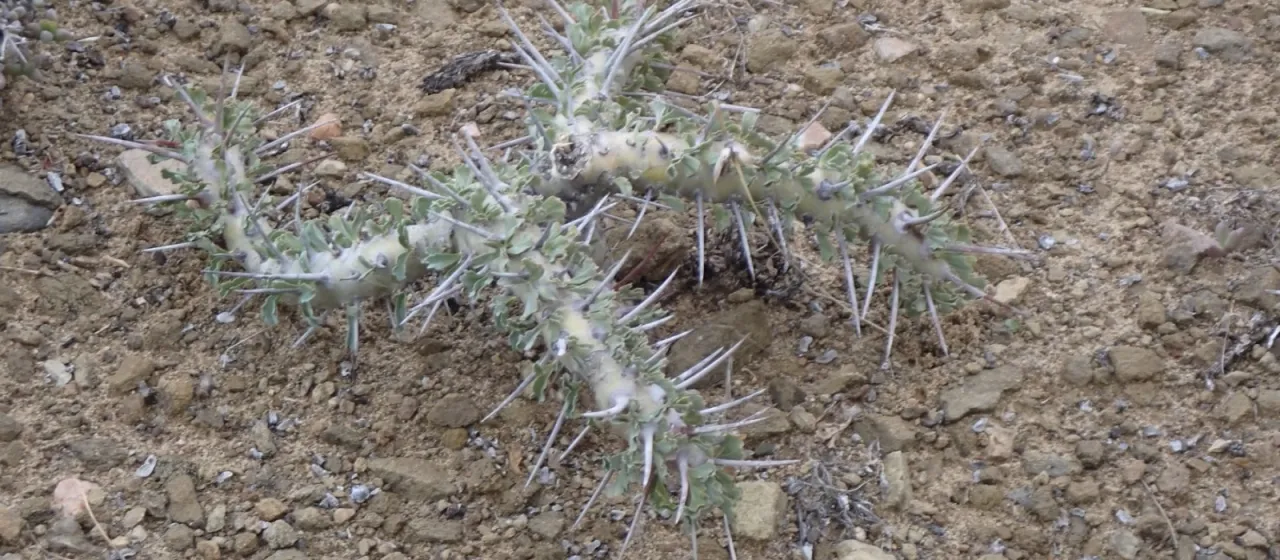
Monsonia crassicaulis is a distinct succulent perennial belonging to the Geraniaceae family. It is widely recognized by botanists and succulent enthusiasts for its thickened stem, known as a caudex, which acts as a vital organ for storing water and nutrients, enabling the plant to thrive in harsh, arid environments that would prove fatal to many other species.
The plant originates from the arid regions of Southern Africa, particularly thriving in parts of Namibia. Its native habitat consists of rocky outcrops and poor, sandy soils, where it has evolved to survive significant seasonal fluctuations in rainfall and intense solar radiation, making it a highly specialized survivor of the desert landscape.
Botanically, Monsonia crassicaulis is characterized by its slow growth rate and compact, often contorted structural form. The foliage is typically grey-green, designed to reduce water loss, and the plant produces delicate, five-petaled flowers that reflect its close botanical relationship with the common geranium, albeit adapted for desert survival.
In terms of agricultural and horticultural requirements, it demands a highly permeable soil mix, such as a coarse substrate with gravel and mineral components, to ensure excellent drainage. The plant requires maximum sunlight exposure and a strictly regulated watering regimen, where the substrate must dry out completely between waterings to prevent root rot, especially during the dormant season.
Economically and horticulturally, this species is primarily cultivated for specialized collections and botanical research. Its management requires expertise in succulent care, as it is susceptible to root decay if drainage is inadequate. Vigilant monitoring for common pests, such as spider mites and mealybugs, is essential to ensure the longevity of the plant in a cultivation setting.