
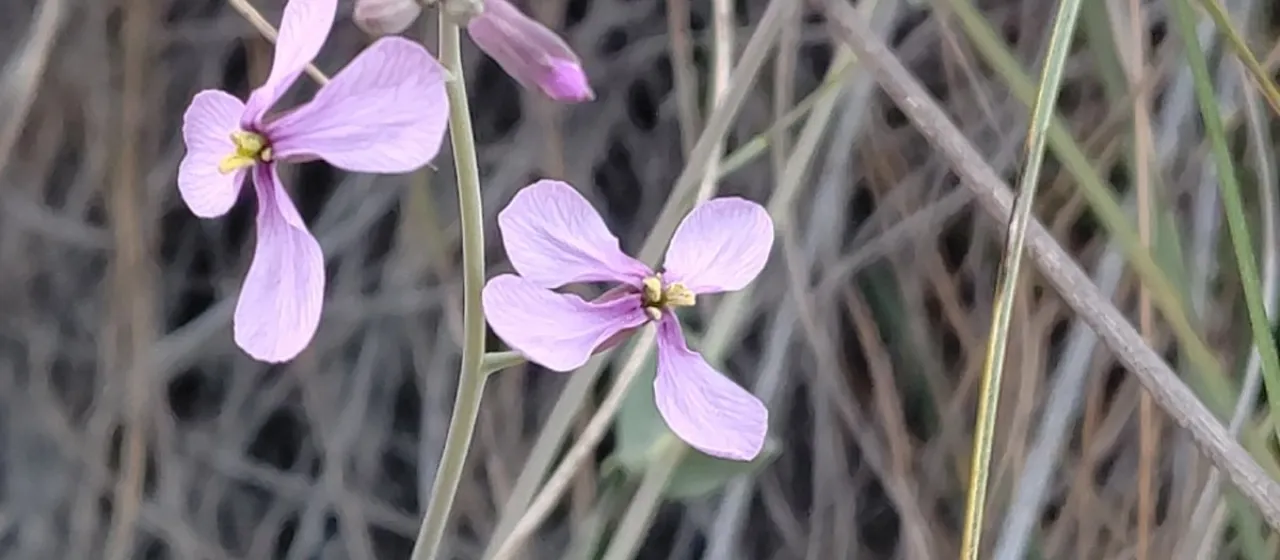
Description
Field moricandia (Moricandia arvensis) is a herbaceous perennial plant belonging to the Brassicaceae family. In agricultural practice, this crop is valued for its remarkable ability to thrive in arid and harsh environments, making it a subject of interest for farmers looking for drought-tolerant forage alternatives.
The plant originates from the Mediterranean basin and has historically spread across Northern Africa and parts of Western Asia. Its cultivation is primarily concentrated in semi-arid regions where climatic conditions prove too demanding for conventional fodder crops, allowing it to utilize marginal land effectively.
Botanically, field moricandia features fleshy, glaucous foliage covered with a waxy cuticle, which acts as a protective layer against extreme heat and water loss. The plant develops a robust taproot system, enabling it to access deep soil moisture and survive prolonged periods of drought, which is its defining ecological trait.
Successful cultivation requires well-drained soils, as the species is highly susceptible to root rot in waterlogged conditions. Agronomic management involves site selection with good sunlight exposure and weed suppression during the establishment phase. While it is hardy, monitoring for pests such as flea beetles, common among Brassicaceae, is essential to ensure a healthy yield.
The primary agricultural and economic applications include:
- Production of forage for livestock in arid regions where grass is scarce.
- Use in soil conservation projects to prevent wind and water erosion.
- Serving as a pollen source for honeybees during early flowering stages.
- Research potential for phytoremediation in moderately saline or degraded soils.