
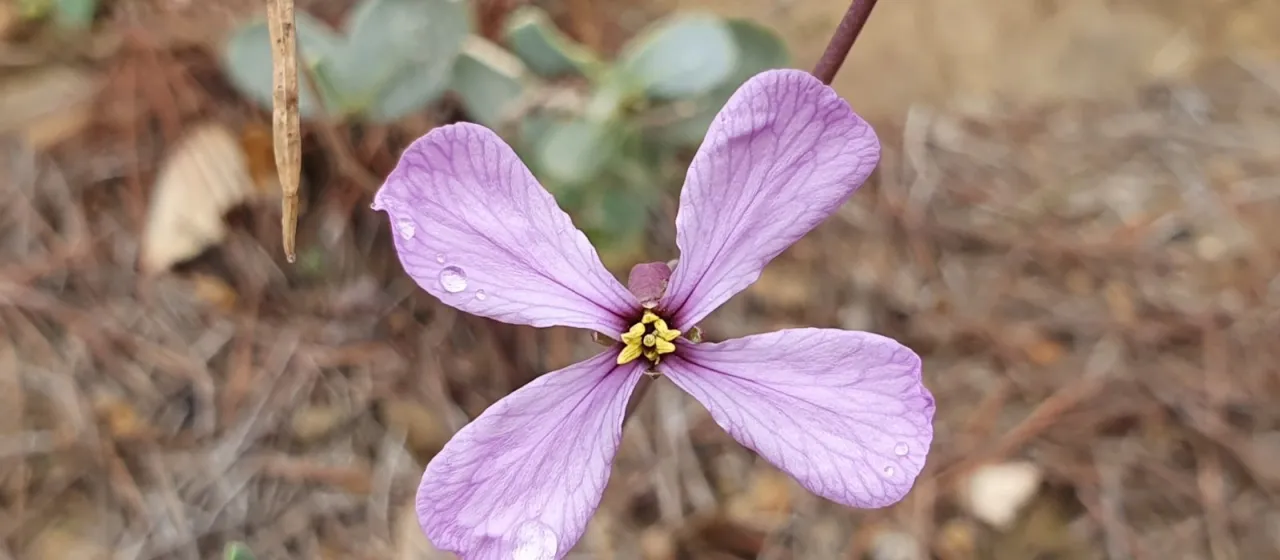
Description
Moricandia suffruticosa is a resilient perennial subshrub belonging to the Brassicaceae family. It is recognized in agronomy as a specialized crop suitable for arid and semi-arid environments where traditional agricultural plants fail to establish themselves due to water scarcity and poor soil quality.
The plant is native to the desert and semi-desert regions of North Africa and the Middle East. It has evolved to thrive in sandy or stony environments, which makes it an ideal candidate for land reclamation projects in degraded areas that require stabilization and increased vegetation cover.
Botanically, it features a robust taproot system that reaches deep into the soil profile. The plant’s stems are typically woody at the base, with succulent leaves that possess a glaucous, waxy cuticle to prevent transpiration. The flowers, ranging from purple to violet, are key identifiers of this Brassicaceae member.
Agricultural practices for this crop emphasize low maintenance. It requires well-drained soils and direct sunlight, showing poor tolerance for waterlogged conditions. Once established, the plant is highly resistant to drought, though initial irrigation is necessary for optimal seedling development and germination.
The primary use of Moricandia is as forage for livestock, particularly in regions where grazing land is limited. Additionally, it serves environmental purposes by preventing wind erosion. Common challenges for growers include:
- Crucifer flea beetles, which threaten seedling growth.
- Aphid infestations during warmer seasons.
- Fungal root rots in compacted or poorly drained soil.