
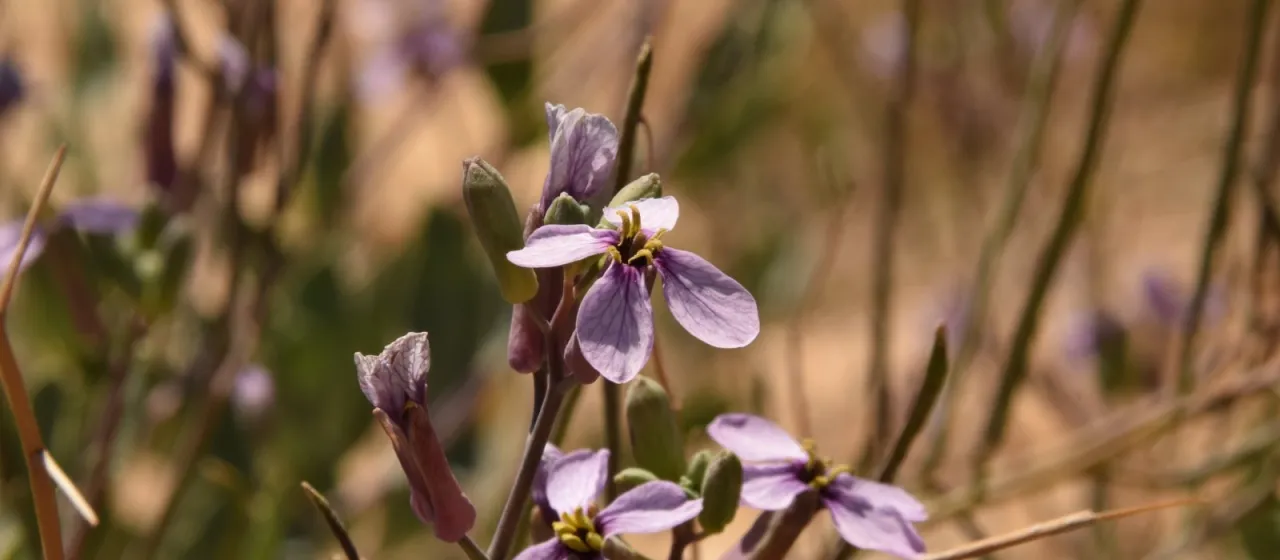
Description
Moricandia nitens is a member of the Brassicaceae family, recognized for its distinct physiological adaptation to arid environments. As a crop, it represents a unique opportunity for sustainable agriculture in dryland regions. The plant is well-regarded for its morphological traits, which include glossy leaves and a robust root system, allowing it to thrive where other species would fail due to water stress.
The native range of Moricandia nitens spans the Mediterranean basin and North Africa. It is traditionally found in calcareous soils and rocky substrates, reflecting its high tolerance for poor soil quality. Its cultivation potential is currently focused on regions facing desertification, where the plant can serve as an essential element for stabilizing land and providing biological cover.
Botanically, the species is characterized by an upright habit, succulent-like leaf structures that assist in moisture retention, and a taproot that exploits soil resources at significant depths. The reproductive biology of Moricandia nitens is highly efficient, producing numerous seeds that remain viable even under high temperatures. Its floral display, typical of the cabbage family, also supports local pollinator populations.
Agronomic requirements for this crop are relatively modest compared to standard oilseeds. It requires full sun exposure and excellent soil drainage to prevent root diseases. While it does not require significant fertilization, ensuring the soil pH remains neutral or slightly alkaline is beneficial for yield optimization. Planting density should be managed to balance canopy closure, which helps in suppressing weeds naturally without the need for intensive herbicide application.
Key areas of economic utilization include:
- Forage and grazing material for livestock in arid-zone farming systems.
- Research into seed oil content for sustainable industrial or energy applications.
- Land rehabilitation and prevention of soil erosion in degraded territories.
In terms of plant health, Moricandia nitens is subject to typical Brassicaceae pests, such as flea beetles, which can cause foliage damage during the seedling stage. Pathogenic threats mainly involve fungal issues triggered by improper drainage or excessive humidity, such as Alternaria leaf spots. Integrated pest management, focusing on early detection and maintaining soil health, is the recommended strategy for maintaining viable yields in agricultural settings.