
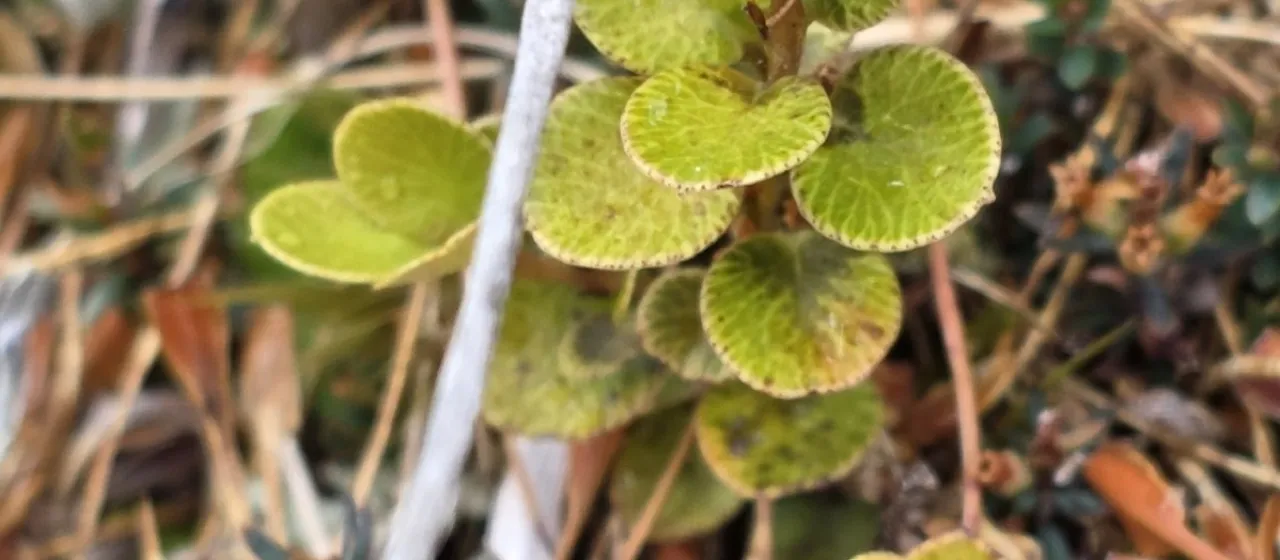
Description
Creeping Myrsine (Myrsine nummularia) is a distinct, low-growing evergreen shrub belonging to the Primulaceae family. Known for its prostrate growth habit, this plant is highly valued for its dense, mat-forming foliage. Despite its slow growth rate, it is an excellent choice for gardeners looking for durable, decorative groundcover that maintains its aesthetic appeal throughout the year.
The plant is native to the alpine and subalpine regions of New Zealand. In its natural habitat, it thrives in rocky, well-draining soils and is accustomed to cool, moist environments. Its evolutionary history in these challenging mountainous terrains has equipped the plant with high resilience to temperature fluctuations and poor soil nutrient profiles, provided the drainage is adequate.
Botanically, the species is characterized by small, round, leathery, dark green leaves set upon creeping, woody stems. The overall architecture of the plant is compact, often resembling moss-like structures. Its flowers are small and inconspicuous, followed by dark, berry-like drupes, which provide additional textural interest during the late summer and autumn seasons.
Regarding its cultivation, Myrsine nummularia requires specific conditions to flourish. The substrate must be porous, acidic to neutral, and free-draining; heavy, waterlogged soils are detrimental to root health. It performs best in environments with cool temperatures and high humidity, making it an ideal candidate for rock gardens or specialized container gardening in temperate climates.
The primary horticultural applications for this species are based on its structural beauty:
- Use in rock gardens or as a specimen in alpine troughs.
- Planting in containers to complement miniature landscapes.
- Acting as a slow-spreading groundcover in shaded areas.
In terms of health management, the plant is relatively robust but susceptible to root rot if water management is improper. Providing adequate aeration is essential to prevent fungal issues. Pests such as spider mites can occasionally appear in overly dry, indoor conditions, but regular observation and consistent moisture management usually suffice to keep the plant in healthy condition.