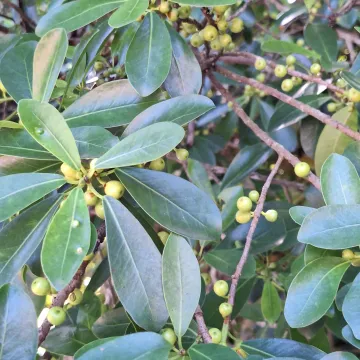

Natal fig
Ficus natalensis Hochst. subsp. leprieurii (Miq.) C. C. Berg
Description
The Natal fig (Ficus natalensis subsp. leprieurii) is an evergreen tree species belonging to the Moraceae family. It is a highly resilient plant known for its structural strength and its ability to thrive in various tropical environments, both as a solitary specimen and as part of diverse ecosystems.
Originally native to African regions, this species is widely distributed across savannahs and woodlands. It is characterized by its semi-epiphytic life cycle, where it may start by growing on other trees before establishing independent roots. This evolutionary strategy makes it exceptionally adaptable to different nutrient conditions and substrates.
Botanically, the plant features dark, glossy foliage and contains a milky latex sap, which is common in the Ficus genus. Its root system is aggressive and expansive, designed to maximize water and mineral uptake. In a controlled cultivation setting, it requires well-draining soil with an acidic to neutral pH balance to maintain optimal growth rates and health.
Agronomic requirements for the Natal fig center on stable temperature management and adequate moisture control. The plant thrives in environments with temperatures ranging from 20 to 28 degrees Celsius. Regular, but not excessive, irrigation is necessary, as root rot is a common risk if the soil becomes waterlogged for prolonged periods.
Economically, the Natal fig is primarily utilized in ornamental horticulture for landscaping and indoor plant design. In some traditional contexts, it has also been utilized for its fibrous properties. Effective management of the plant involves monitoring for common pests, such as scale insects, aphids, and spider mites, which can be mitigated through integrated pest management techniques including biological controls and targeted chemical treatments.
Photo gallery