
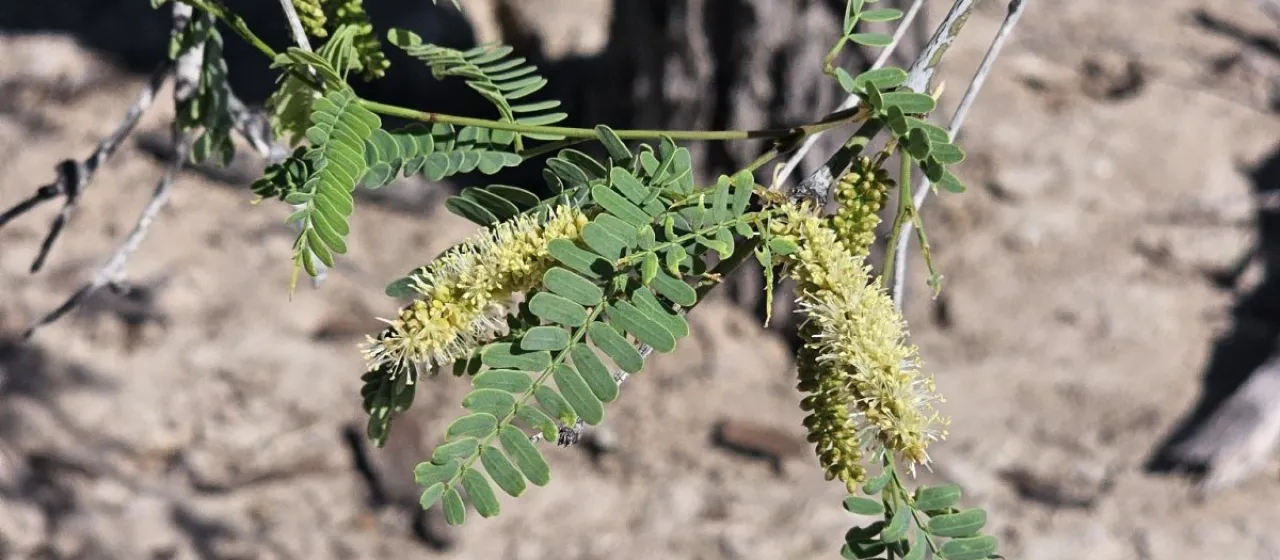
Description
Neltuma articulata is a woody plant belonging to the Fabaceae family. Previously classified under the Prosopis genus, this species is renowned for its remarkable ability to thrive in extremely arid environments where water scarcity is the primary constraint for agricultural productivity.
Native to the arid regions of Mexico, this plant has adapted to survive in harsh desert and semi-desert conditions. Its evolutionary history has made it highly resilient to heat, high solar radiation, and nutrient-poor soils, positioning it as an essential component of local ecosystems.
Botanically, the plant features a robust deep-reaching root system designed to scavenge groundwater. Its foliage is typically pinnate, and it produces distinctive legumes (pods) that are segmented, giving the plant its specific name. These pods provide a significant nutrient source for various herbivores and livestock.
Agronomic requirements for Neltuma articulata focus on full sun exposure and well-drained soil conditions. While the plant can tolerate saline soils and various textured substrates, it is critical to avoid waterlogging, which can lead to root diseases. Propagation is usually achieved through seeds, which exhibit high viability in dry environments.
The economic value of this culture includes its use as a high-quality fodder for livestock, timber production, and erosion control. Typical management challenges involve monitoring for seed-eating insects and ensuring proper density to prevent competition. The following points summarize key aspects of its health:
- Resistance to extreme drought stress.
- Sensitivity to high humidity and water accumulation.
- Susceptibility to certain wood-boring insects.
- Beneficial impact on soil nitrogen levels due to nodulation.