
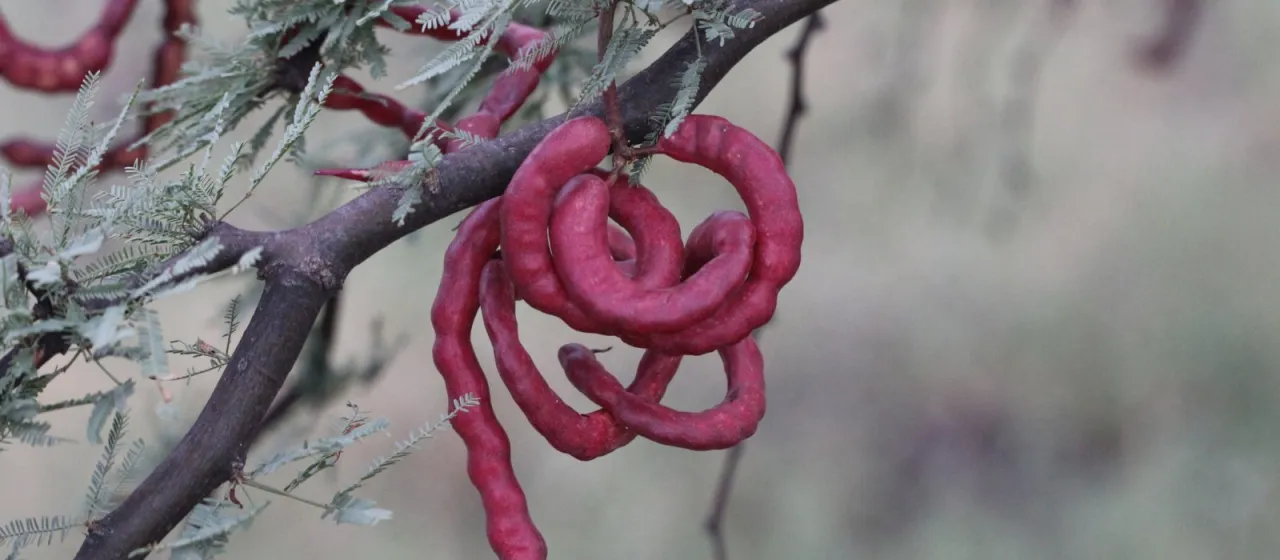
Description
Neltuma caldenia, previously recognized as Prosopis caldenia, is a deciduous tree species belonging to the Fabaceae (legume) family. Native to the Pampas region of Argentina, this plant is well-adapted to semi-arid environments, serving as a defining species for its specific ecological niche known as the "caldenal."
The botanical structure of Neltuma caldenia is characterized by a sturdy, branched trunk and a deep, extensive root system designed to access water reservoirs during prolonged dry seasons. The foliage consists of small leaflets that help the plant minimize water loss through transpiration, while the branches are armed with sharp spines as an evolutionary defense mechanism.
Regarding cultivation requirements, this species thrives in well-drained sandy or loamy soils. It requires significant solar radiation and is highly intolerant of waterlogged conditions. Successful establishment in agricultural systems depends on proper site selection where groundwater levels remain moderate, allowing the root system to develop without risk of anaerobic stress.
Economically, Neltuma caldenia is valued for its extremely dense and rot-resistant timber, which is frequently utilized for high-quality rustic furniture and construction materials. Additionally, the tree provides high-protein forage in the form of pods for livestock, and its nitrogen-fixing capabilities make it an excellent choice for improving soil quality in agroforestry projects.
Common agricultural challenges involve monitoring for specific wood-boring insects and root rot pathogens that can thrive if the soil drainage is inadequate. Key development characteristics include:
- Exceptional resilience to high summer temperatures and low rainfall.
- Efficient symbiotic relationship with nitrogen-fixing soil bacteria.
- Slow growth rate which requires patience during the early plantation stages.
- High biomass production potential in arid land restoration programs.