
Description
Yellow puff (lat. Neptunia lutea) is a perennial herbaceous plant belonging to the legume family (Fabaceae), subfamily Mimosoideae. It is widely recognized for its creeping growth habit and its ability to thrive in moisture-rich environments, often acting as a bridge between terrestrial and aquatic plant communities.
The native distribution area of Neptunia lutea centers on the southern regions of the United States and Mexico. The plant naturally inhabits wet prairies, marshes, and the edges of bodies of water, thriving in climates where high humidity and warm temperatures persist throughout the growing season.
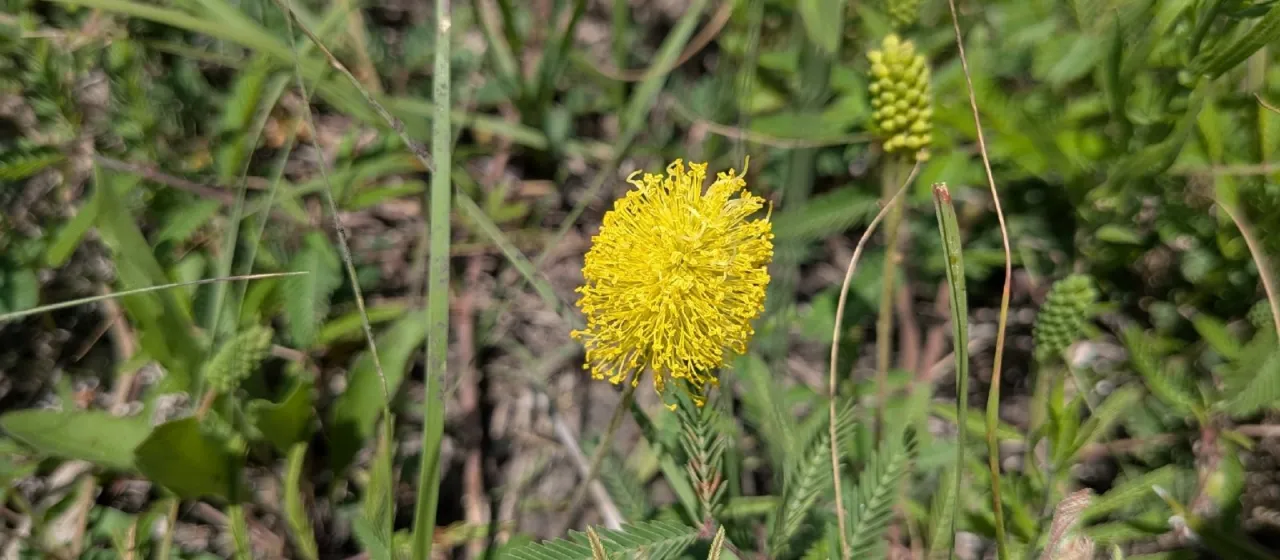
Botanically, the plant features pinnately compound leaves that exhibit thigmonasty, folding when touched. The most distinctive characteristic is its spherical, bright yellow inflorescences, which resemble small puffs. These flowers serve as a vital source of nectar for local pollinators, including various bee species.
Cultivation requirements necessitate well-drained but consistently moist soil. The plant demands full sun exposure to maintain its vigor and color intensity. While it is naturally adapted to wetlands, successful cultivation in controlled environments requires avoiding extreme frost, as the species is essentially a warmth-loving perennial.
- Excellent nitrogen-fixing ability through symbiotic root nodules.
- Unique foliage response to mechanical stimuli.
- Adaptability to seasonally flooded soil conditions.
- High potential for wetland restoration and stabilization.
In terms of agricultural and ecological use, the yellow puff is increasingly valued for its role in soil health improvement. By fixing nitrogen in the soil, it acts as a green manure in suitable environments, helping to increase the biodiversity of native plantings while improving fertility for surrounding flora.
The primary threats to Neptunia lutea include fungal pathogens that emerge under poor ventilation and excessive stagnant water conditions. Management strategies should prioritize maintaining proper soil porosity and monitoring for common leaf-eating insects to ensure the long-term vitality of the population.