
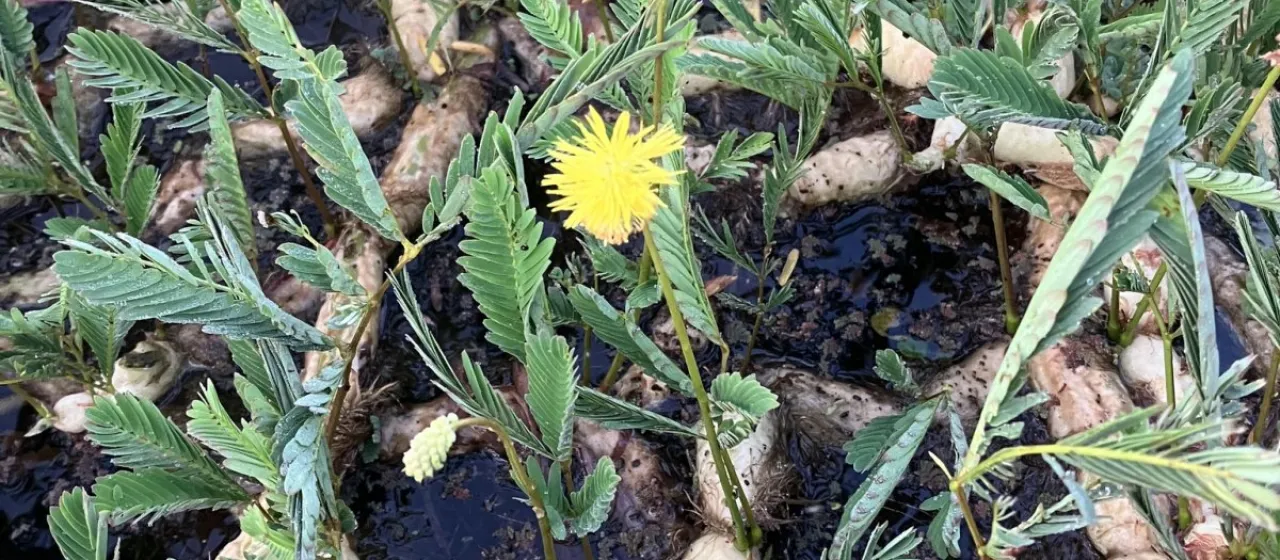
Description
Water mimosa (Neptunia oleracea) is an aquatic perennial plant belonging to the Fabaceae family. It is distinct for its buoyant, spongy stems that allow it to float on the water surface and its sensitive foliage that folds upon touch, sharing characteristics with the sensitive plant, Mimosa pudica.
The plant originates from the tropical zones of Asia, Africa, and the Americas. It thrives in stagnant or slow-moving freshwater bodies, such as ponds, canals, and flooded agricultural fields. In Southeast Asia, it is extensively cultivated as a popular leafy vegetable, prized for its texture and rapid growth rate in warm, wet conditions.
Botanically, Neptunia oleracea features pinnate leaves and prostrate or floating stems that develop adventitious roots at the nodes. The plant produces small, bright yellow globular flower heads held above the water line. These are followed by pods containing seeds, which serve as the primary means of propagation in the wild.
For cultivation, water mimosa requires high ambient temperatures and a constant water supply. It performs best in sun-drenched environments with nutrient-rich silty beds. The plant is adaptable but performs poorly if the water temperature drops significantly or if the substrate lacks essential nutrients like nitrogen and phosphorus.
The culinary usage focuses on the young, crisp stems and leaves, which are commonly eaten raw or stir-fried in traditional dishes. Producers should be aware of several key challenges to ensure crop health and productivity:
- Leaf-eating caterpillars that can quickly devastate a plantation.
- Fungal diseases occurring in stagnant, poorly aerated water.
- Heavy metal accumulation if the water source is contaminated by urban runoff.