
Description
Neptunia monosperma is a perennial leguminous plant belonging to the family Fabaceae, subfamily Mimosoideae. It is recognized for its adaptive capacity in challenging tropical landscapes, functioning as an important nitrogen-fixing species that contributes to soil health and local biodiversity in arid and semi-arid environments.
Originating from Northern Australia, this species is naturally found in regions characterized by seasonal flooding. Its geographic distribution is tightly linked to heavy clay soils. The plant has evolved to thrive in areas where water levels fluctuate significantly, making it a robust candidate for ecological restoration in similar climatic zones.
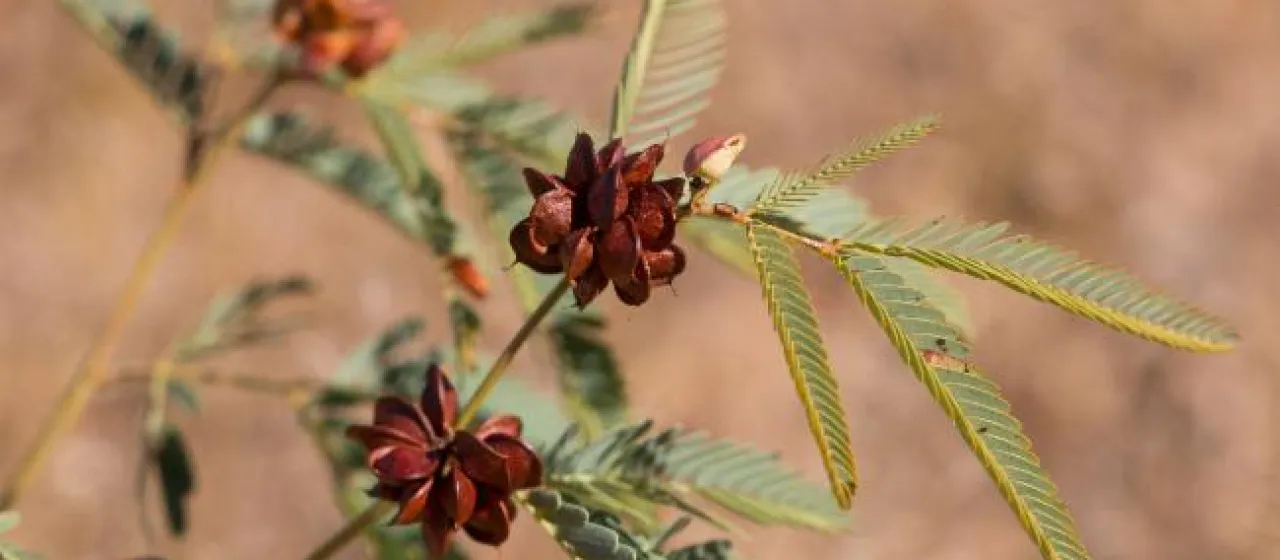
The botanical profile of Neptunia monosperma includes bipinnate leaves and small, bright yellow globular flower heads. The defining characteristic is the fruit structure: a compressed pod that typically contains only a single seed. This morphological trait allows for effective dispersal in environments prone to seasonal shifts in water availability.
Cultivation requirements involve selecting appropriate soil types, preferably heavy clays with adequate moisture retention. Agronomic management requires careful monitoring of the moisture cycle, as the plant is adapted to monsoon-like patterns. Proper field preparation and weed control during the establishment phase are essential to ensure the plant successfully competes with other native flora.
Regarding economic use, the species is primarily valued as a forage crop in extensive livestock systems. It provides high-protein biomass for cattle grazing. Farmers must manage potential threats such as leaf-eating insects and root diseases that may arise from stagnant water conditions during excessive rainfall periods.