
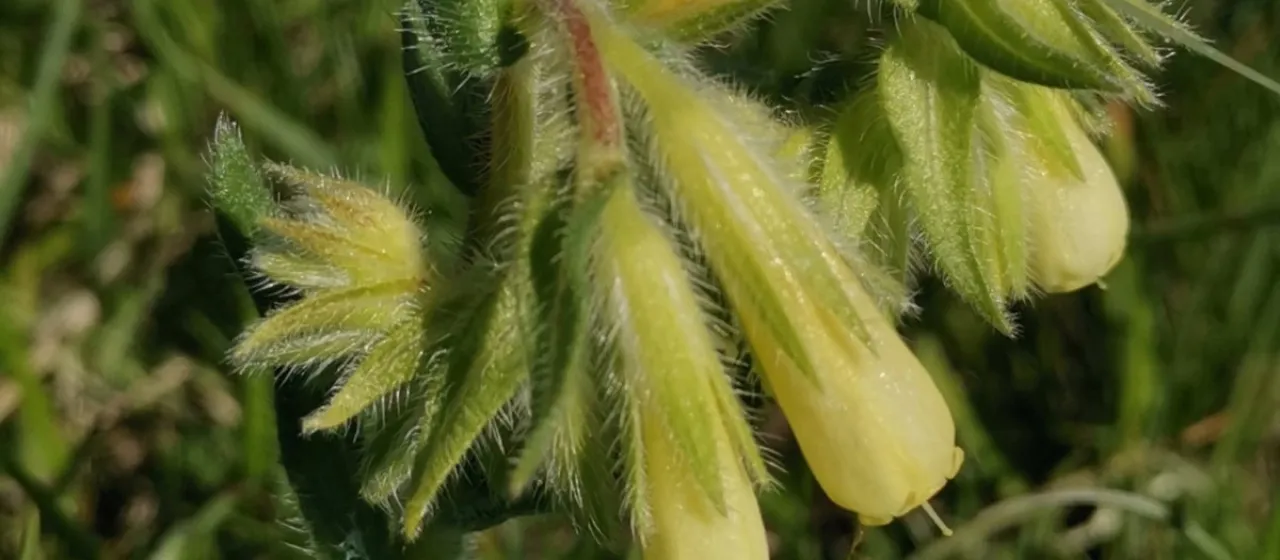
Description
Onosma pseudoarenaria is a perennial herbaceous plant belonging to the Boraginaceae family. Known for its resilience in harsh environments, this species is often classified as a semi-shrub. It is a specialized plant adapted to life in sandy and arid steppe conditions, playing a significant role in its native ecosystem.
The plant originates from the steppe zones of Eastern Europe. Its natural range is restricted to specific soil types, mainly sandy and stony soils where competition from taller, more aggressive plant species is low. This geographic limitation makes it a subject of interest for conservation and specialized botanical cultivation.
Botanically, Onosma pseudoarenaria is characterized by dense trichomes covering its stems and leaves, which serve as a defense mechanism against water loss and intense solar radiation. The tubular, bell-shaped flowers typically exhibit a bright yellow color and grow in terminal cymes. A deep, taproot system allows the plant to thrive even during prolonged droughts.
Cultivation requirements are strict: the plant necessitates well-draining, nutrient-poor soil, preferably with a sandy or rocky composition. Irrigation should be kept to a minimum as the species is highly susceptible to root rot in moist environments. Providing full sun exposure is essential for the healthy development of its inflorescences.
In terms of agricultural and practical use, the plant is primarily studied for its secondary metabolites, such as naphthoquinones, which have potential pharmaceutical applications. Furthermore, it serves as an excellent decorative choice for xeriscaping, requiring little to no maintenance once established. It also serves as a valuable nectar source for local pollinators in steppe regions.
Common issues encountered during cultivation include:
- Root rot caused by poor soil drainage.
- Powdery mildew triggered by high humidity levels.
- Aphid infestations affecting terminal flower clusters.
- Damage caused by subterranean larvae during the seedling stage.