
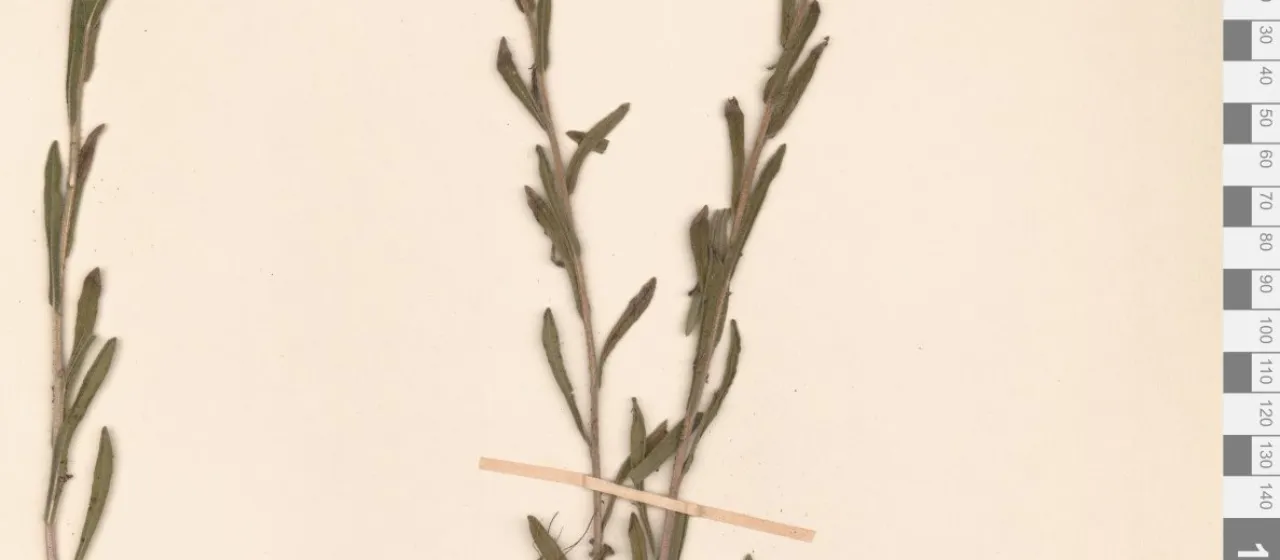
Description
Onosma rigida is a perennial herbaceous plant belonging to the Boraginaceae family. This species is recognized for its high degree of adaptation to arid environments and its distinct morphological features that allow it to thrive in nutrient-poor, rocky substrates where other crops would fail.
The native distribution of Onosma rigida spans the semi-arid regions of Eurasia, including mountainous slopes and steppe ecosystems. It prefers well-drained, lime-rich soils, reflecting its evolutionary strategy of surviving in habitats with minimal water retention, which has become a subject of interest for sustainable agricultural development in arid climates.
Botanically, the plant is characterized by a dense covering of stiff hairs (trichomes) on its leaves and stems, which significantly reduce transpiration rates. The foliage typically forms a basal rosette, while the inflorescences consist of elegant, bell-shaped flowers that appear in early summer. Its root system is deep and woody, enabling the plant to access deep-seated groundwater reserves.
In terms of agricultural management, Onosma rigida requires full sun exposure and excellent soil drainage. It is not suitable for heavy, clay-rich soils that retain moisture, as this leads to root rot. Cultivation practices should focus on minimal soil disturbance to preserve the structural integrity of the root system and careful irrigation management during the establishment phase.
The plant has gained economic attention for its medicinal properties, particularly the roots which contain quinone derivatives known for antibacterial and anti-inflammatory qualities. Common pests include aphids and mites, while fungal diseases can emerge only in cases of excessive soil moisture. Due to its drought resistance and aesthetic value, it is also increasingly being integrated into xeriscaping and pollinator-friendly agricultural systems.