
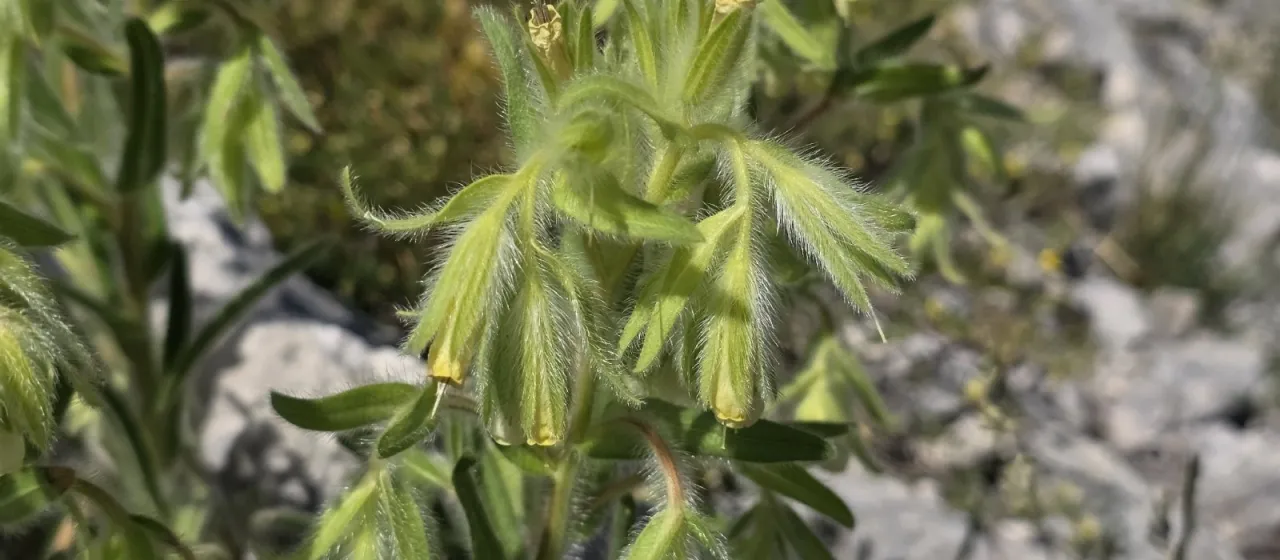
Description
Onosma visianii is a perennial herbaceous plant belonging to the Boraginaceae family. It is a specialized crop recognized for its evolutionary adaptation to dry, rocky environments and its potential as a source of bioactive compounds, particularly naphthoquinones found in its root system.
The plant originates from the Balkan Peninsula, where it thrives in natural steppe conditions and rocky terrain. Its geographic distribution has historically been localized, but its environmental resilience has sparked interest in its cultivation within agricultural systems designed for low-input, sustainable farming practices.
Botanically, the plant is characterized by its stiff, pubescent leaves that provide an effective shield against high solar radiation and water loss. The flowers are typically tubular or bell-shaped, appearing in cymes. The root system is deep and woody, allowing the plant to tap into deep soil moisture and nutrients, which is crucial for survival in arid climates.
For successful cultivation, Onosma visianii requires well-drained, lime-rich soils with a neutral to slightly alkaline pH. Drainage is the most critical factor; waterlogging leads to rapid root rot and crop failure. The species performs best in full sun exposure and requires minimal soil fertilization, as it is adapted to nutrient-poor environments.
- Requires soil with excellent drainage properties.
- Minimal nitrogen fertilizer is recommended to avoid excessive vegetative growth.
- Propagation is typically achieved through seeds requiring stratification.
- Pest management focuses on preventing aphid infestations and ensuring good air circulation.
The economic value of Onosma visianii is primarily linked to its pharmacological potential and ornamental utility. The secondary metabolites extracted from its roots are studied for their biological properties. In agricultural landscapes, it serves as an excellent candidate for xeriscaping and sustainable gardens, offering high aesthetic value with minimal maintenance requirements.