
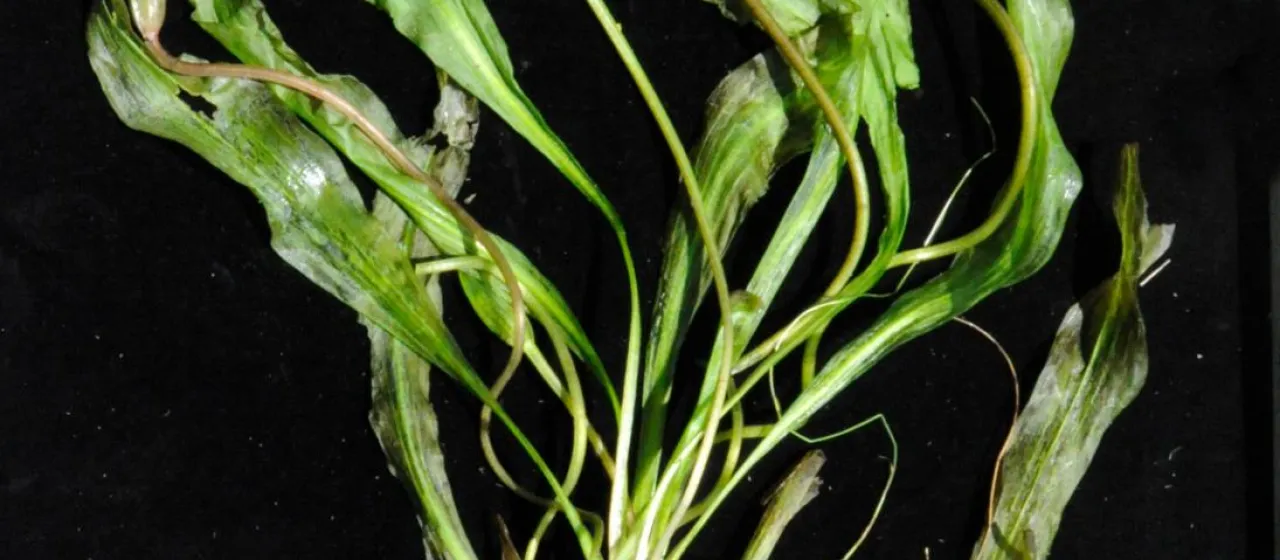
Description
Ottelia ulvifolia is a perennial aquatic plant belonging to the Hydrocharitaceae family. Recognized for its unique, ribbon-like or lanceolate submerged leaves, this plant is a staple in specialized botanical collections due to its distinct morphology and adaptation to freshwater habitats.
The species is native to tropical Africa and Madagascar, where it thrives in diverse water bodies such as slow-moving rivers, lakes, and marshes. Its natural habitat provides the nutrient-rich sediment necessary for its extensive root system, which acts as the primary anchor against water currents.
Botanically, Ottelia ulvifolia is characterized by a basal rosette of leaves that can reach significant lengths. The leaf margins are typically wavy or undulate, resembling the marine algae Ulva, which inspired its scientific name. It possesses a reproductive strategy involving flowers that emerge above the water surface to ensure cross-pollination by insects.
Cultivation requires specific environmental conditions, including temperatures between 22 and 28 °C and high-intensity lighting. A nutrient-dense substrate is mandatory for healthy development, as the plant relies heavily on root-based nutrient uptake. Consistent monitoring of water chemistry, particularly CO2 levels and trace mineral availability, is essential for professional aquatic plant management.
In terms of agricultural and horticultural use, it is primarily valued for its ornamental role in large-scale aquaria and controlled greenhouse ponds. Potential phytosanitary issues include epiphytic algae growth on its delicate foliage and susceptibility to root rot caused by stagnant water conditions or nutrient imbalances in the substrate.
- Family: Hydrocharitaceae
- Origin: Tropical Africa, Madagascar
- Optimal Temperature: 22–28 °C
- Substrate Requirements: Nutrient-rich
- Main Use: Ornamental aquatic culture