Description
Paronychia echinulata is a herbaceous plant belonging to the Caryophyllaceae family. While not a conventional agricultural crop, it remains a subject of botanical interest due to its remarkable ability to thrive in extremely poor, arid conditions where most traditional flora fails to survive.
Originating from the Mediterranean region and parts of North Africa, this species is well-adapted to harsh environments. Its natural habitat includes sandy soils, rocky slopes, and open, exposed areas with high solar radiation. These geographical origins dictate its biological imperative to conserve water and survive long periods of drought.
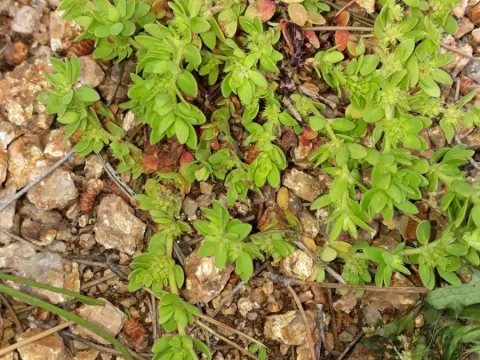
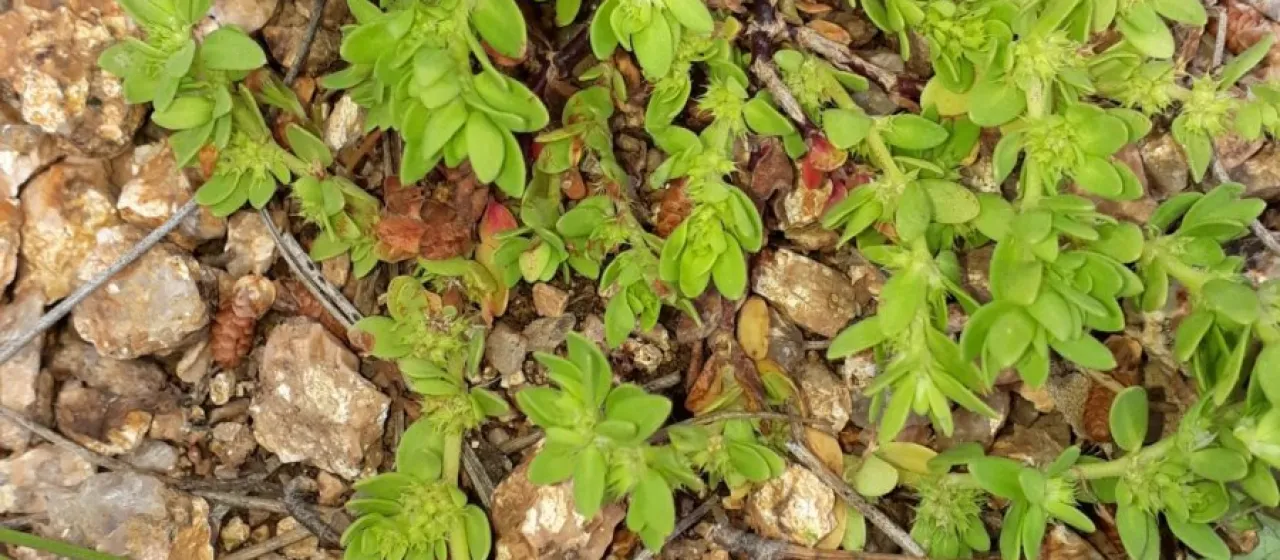
Botanically, it is characterized by a low-growing, mat-forming habit. The foliage is small and narrow, often protected by specialized bracts that give the plant a prickly, echinulate appearance. The flowers are minuscule and clustered, demonstrating evolutionary adaptations for pollination in sparsely populated, harsh environments.
Climate and soil requirements are strict: the plant demands excellent drainage and high light intensity. It is highly intolerant of waterlogging and nutrient-rich soils, which can lead to rapid root decay. In terms of agronomy, it cannot be farmed in standard agricultural conditions but may have niche applications in xeriscaping or soil erosion control on marginal land.
Economic use is currently limited to environmental conservation, specifically as a ground cover for stabilizing loose, arid soils.
- Disease resistance: high in dry, sandy soils.
- Major pests: occasionally affected by aphids or root-rot fungi in high-humidity climates.
- Management: minimal requirements once established.
Photo gallery