Description
Paronychia polygonifolia is a perennial herb belonging to the Caryophyllaceae family. It is recognized for its mat-forming growth habit, creating dense, low-growing cushions that are highly valued in horticultural practices for covering rocky ground. This plant is a typical representative of alpine flora, perfectly adapted to survival in nutrient-poor environments.
The origin of this species is traced to the mountainous regions of Europe, particularly the Pyrenees and the Alps. Its native habitat consists of rocky outcrops, gravelly slopes, and arid mountainous meadows. This evolutionary background allows the plant to thrive in regions with thin soils and intense sunlight, making it an excellent candidate for specialized landscaping in harsher climates.
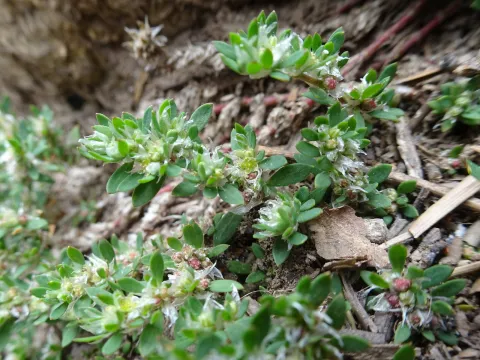
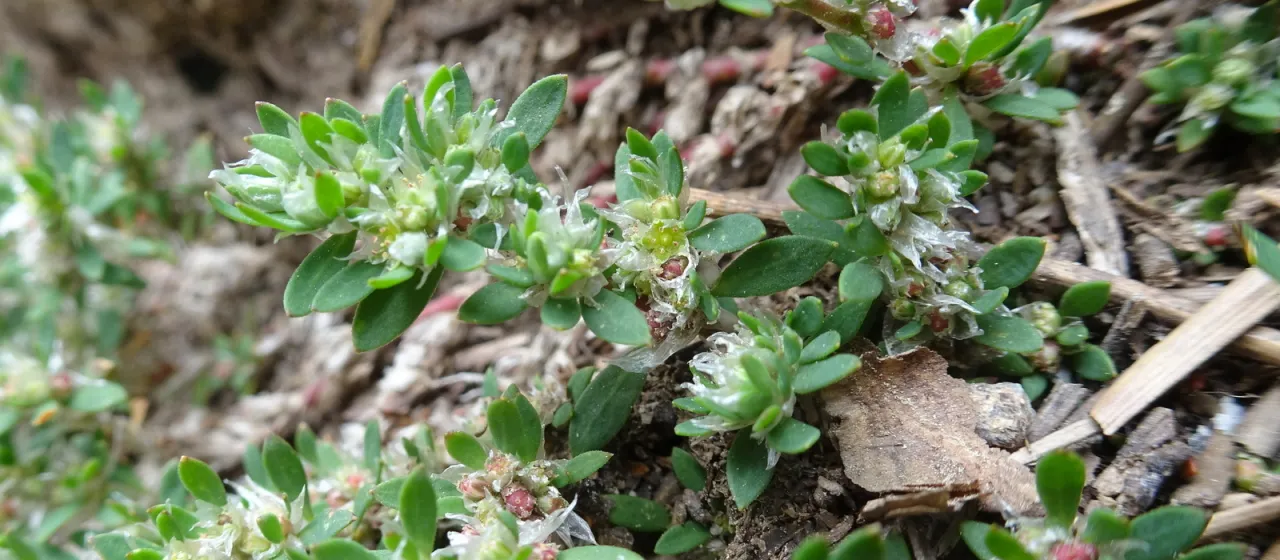
Botanically, Paronychia polygonifolia is characterized by its creeping stems covered with small, lanceolate leaves. The most striking features are the silvery-white bracts that surround the inconspicuous flowers. These bracts persist throughout the season, providing a unique metallic texture to the landscape. The plant demonstrates high resilience against cold winds and significant diurnal temperature swings.
Regarding agrotechnical requirements, this culture demands excellent drainage above all else. It is best suited for sandy, rocky, or gritty soils with a neutral pH. The cultivation success depends on avoiding moisture retention around the base of the plant. A layer of stone mulch is recommended to promote airflow and prevent decay of the creeping stems, which is the most frequent cultural issue.
Its primary commercial use is in xeriscaping and rock gardening. It is an ideal plant for stabilizing small slopes and filling crevices in retaining walls. In terms of protection, the main threats are root rot caused by poor soil drainage and susceptibility to aphids during exceptionally hot and stagnant summer months. Integrated pest management and proper site selection are the best tools for maintaining plant vigor.
Photo gallery