Description
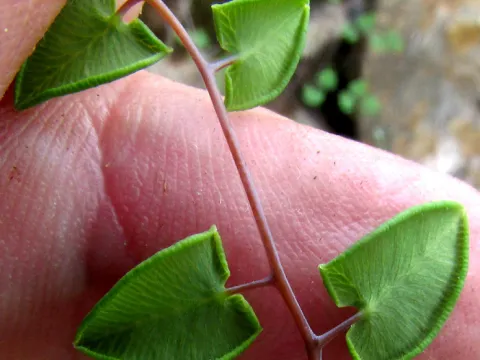
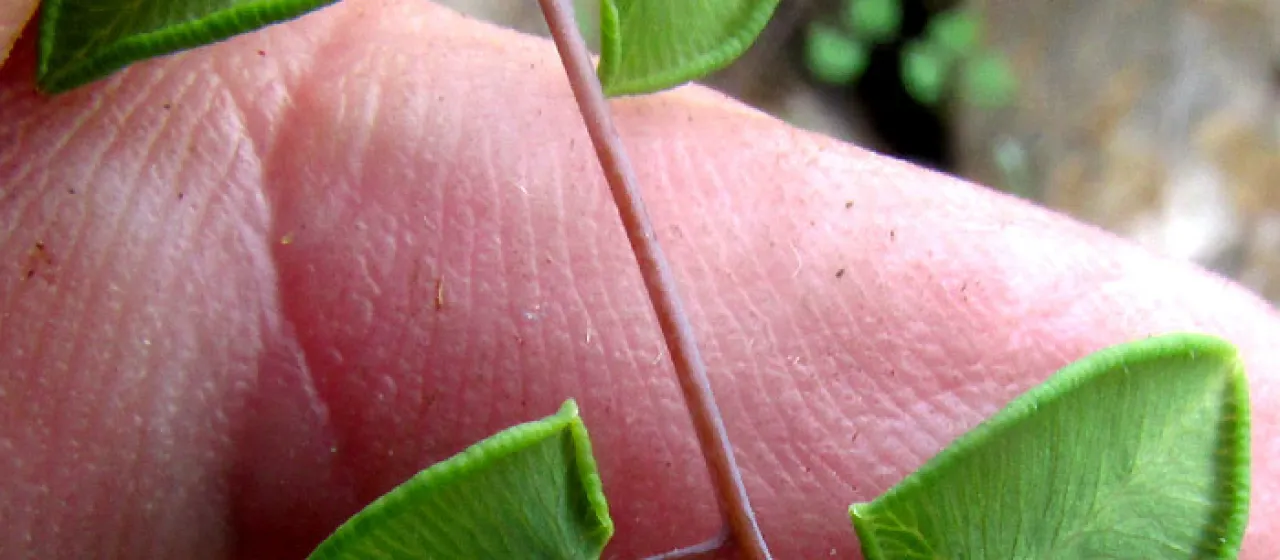
Pellaea sagittata, commonly known as the arrow-leaved cliff brake, is a distinct perennial fern species belonging to the family Pteridaceae. Renowned for its unique arrow-shaped leaflets and dark, wiry stems, this plant is a staple in botanical collections focusing on architectural indoor foliage.
The species is native to mountainous regions in Mexico and parts of South America. In its natural habitat, it thrives in rocky crevices and slopes, which has shaped its biological preference for well-drained, porous growing media. It is adapted to moderate light conditions, often found in the partial shade of tropical forest margins or cliff sides.
Botanically, the plant features creeping rhizomes and leathery fronds that exhibit a distinct glaucous sheen. The dark, sturdy petioles provide structural support, making the plant remarkably resilient to handling compared to more delicate ferns. Its growth habit is relatively slow, forming neat, compact clusters over time.
Successful cultivation requires specific environmental management. The soil must be loose and airy, incorporating components like perlite or small gravel to facilitate drainage. Unlike many ferns, Pellaea sagittata is somewhat tolerant of drier periods, but it performs best when the substrate is kept consistently moist but never waterlogged. It thrives in ambient temperatures between 15°C and 22°C.
In commercial and hobbyist horticulture, it is utilized as an ornamental plant for containers and greenhouses. While generally hardy, the plant is susceptible to common greenhouse pests such as scale insects and spider mites, especially in low-humidity environments. Disease issues are primarily limited to root rot, which serves as a primary indicator of improper irrigation management or poor soil drainage.
Photo gallery