Pencilled cranesbill
Geranium versicolor L.
Description
The pencilled cranesbill (Geranium versicolor L.) is a rhizomatous perennial plant belonging to the Geraniaceae family. Recognized for its intricate floral patterns and resilient nature, it has become a favored species among landscape designers and home gardeners looking for low-maintenance ground cover options.
The plant originates from the mountain ranges of Southern Europe, particularly in Italy and the Balkan Peninsula. Because of its native alpine habitat, it possesses an inherent robustness that allows it to thrive in temperate climates, where it often colonizes woodland margins and rocky slopes.
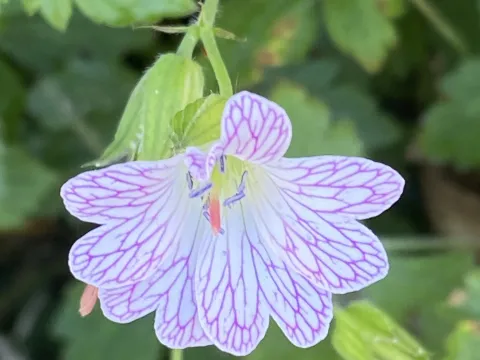
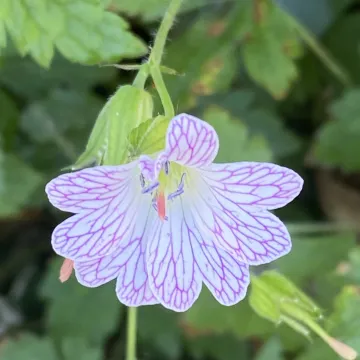
Botanically, this species is characterized by its palmately lobed, mid-green foliage and distinct cup-shaped flowers. The petals are predominantly white or pale pink, uniquely accented with fine, deep purple veins, giving the blossoms a pencilled appearance that earns them their common name.
Successful cultivation requires soil that is rich in organic matter and maintains consistent moisture without becoming waterlogged. While it is quite adaptable, it performs best in partial shade. Maintenance is straightforward, consisting of spring fertilization, removal of old foliage to encourage fresh growth, and division of clumps every three to four years.
In terms of agricultural and horticultural use, it is predominantly utilized for ornamental purposes. Its ability to form dense carpets of vegetation makes it an excellent choice for suppression of weeds. While the plant is remarkably resistant to many pests and diseases, gardeners should monitor for common issues like mildew if the planting site lacks adequate air circulation.
Photo gallery