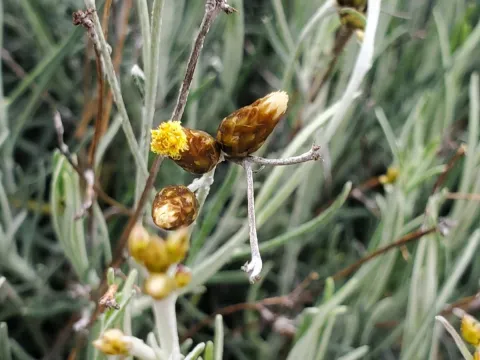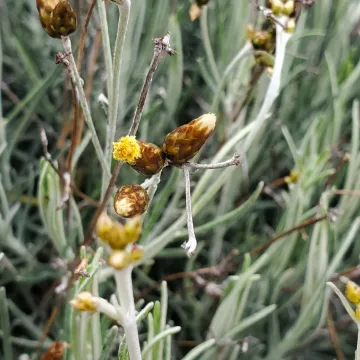
Phagnalon sordidum
Phagnalon sordidum
Description
Phagnalon sordidum is a perennial herb and subshrub belonging to the Asteraceae (daisy) family. Known for its remarkable resilience, this species has gained attention in botanical and horticultural circles as a candidate for sustainable landscapes, particularly in regions prone to extreme heat and limited water availability.
Originating from the Mediterranean basin, this plant is native to arid environments, including limestone crags, rocky outcrops, and scrublands. Its evolutionary path has equipped it to survive in harsh conditions where nutrient-dense soil is scarce, allowing it to colonize challenging sites that are inhospitable for more demanding agricultural crops.
The botanical identity of Phagnalon sordidum is defined by its characteristic dense tomentose (woolly) indumentum that covers the stems and leaves. This dense layer of hairs serves a physiological purpose: reducing transpiration and reflecting excessive sunlight. The inflorescences consist of small composite flower heads that possess high ornamental value.
Successful cultivation of this species depends primarily on soil drainage. It requires a coarse, porous medium to prevent root rot, which is the most frequent cause of failure in agricultural or garden settings. The plant thrives in full sun and requires virtually no fertilization, making it a low-input crop suitable for xeriscaping.
- Superior drought and heat tolerance.
- Low nutritional requirements for successful growth.
- Effective natural defense against herbivory due to leaf pubescence.
- Ideal for Mediterranean-style climate garden design.
The primary use of Phagnalon sordidum is in ornamental gardening and ecological restoration efforts on dry, degraded land. While generally robust, it may suffer from fungal infections if exposed to high humidity or stagnant water. It remains largely unaffected by common garden pests, as the physical texture of the foliage acts as an effective repellent.
Photo gallery