American mistletoe
Phoradendron leucarpum
Description
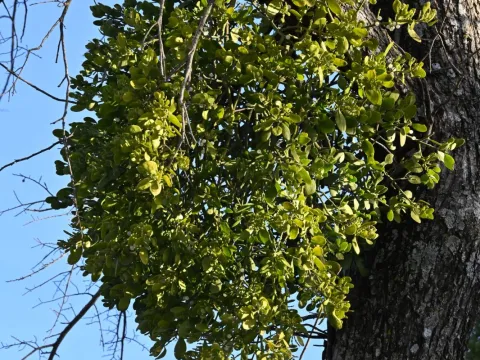
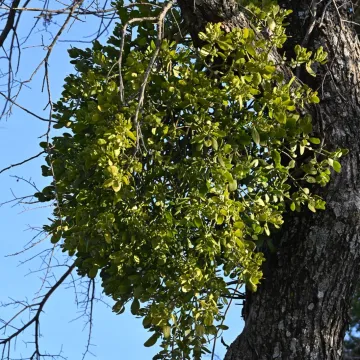
American mistletoe (Phoradendron leucarpum) is a distinctive hemiparasitic plant belonging to the Santalaceae family. It is distinct from its European counterpart, Viscum album, and is native to the Americas. This species is classified as a hemiparasite because it possesses chlorophyll and produces its own energy via photosynthesis while relying on host trees for water and mineral nutrient absorption.
The geographic distribution of this species covers a vast area from New Jersey to Florida and westward to the edges of the Great Plains in the United States, extending into Mexico. It thrives in diverse climates, showing a particular preference for deciduous hardwood trees such as oaks, elms, and maples, where it can access abundant sunlight in the forest canopy.
Botanically, the plant is characterized by leathery, evergreen leaves and clusters of small, white, berry-like drupes that persist through the winter. The plant uses haustoria to invade the host's vascular tissue. These structures essentially act as specialized roots that graft into the tree's xylem, creating a direct pathway for resource transfer between the parasite and the host.
From an agricultural and arboricultural perspective, Phoradendron leucarpum is often treated as a pest species. Heavy infestations can lead to limb dieback and decreased tree vigor. Integrated pest management strategies involve pruning infested branches at least 12 inches below the site of attachment, monitoring tree health, and managing site conditions to minimize host susceptibility to infestation.
The cultural significance of the American mistletoe is primarily centered on its use as a holiday decorative plant. Beyond this, it is recognized for its role in local ecosystems, as the berries provide a crucial winter food source for various bird species. However, it is essential to emphasize that the plant contains toxic compounds and should be handled with caution to prevent accidental ingestion by pets or children.
Photo gallery