Pepper-leaf Phoradendron
Phoradendron piperoides
Description
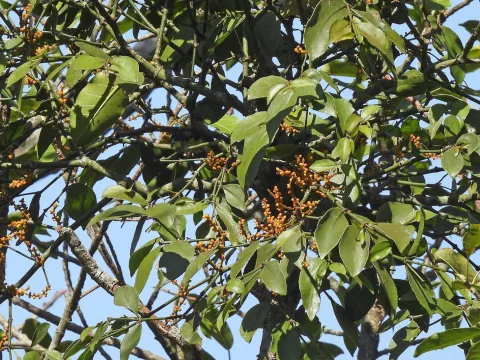
Pepper-leaf Phoradendron (Phoradendron piperoides) is a perennial hemiparasitic shrub belonging to the Santalaceae family. As a specialized plant, it thrives by attaching itself to the branches of host trees, utilizing specialized root structures known as haustoria to siphon water and nutrients directly from the host's vascular system.
The species is indigenous to the tropical and subtropical regions of the Americas, with a natural range spanning from Mexico throughout Central and South America. In an agricultural context, it is typically treated as a pest that interferes with the growth of forestry and plantation trees, often reducing the overall yield and structural integrity of the host plant.
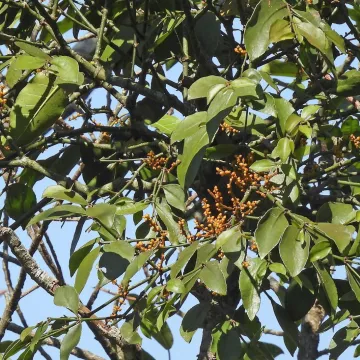
Botanically, the plant is characterized by leathery, lanceolate leaves that bear a resemblance to the foliage of pepper plants. It exhibits a distinct dichotomous branching pattern, allowing the plant to form dense, rounded bushes within the canopy of its host. The plant produces small flowers followed by fleshy berries, which are primarily dispersed by local avian populations.
Agronomic management of this species focuses on biological control and physical sanitation. Because it is not a traditional crop, there are no cultivation requirements. Instead, field management involves the periodic pruning of infested branches to prevent the spread of the parasite within plantation settings. It thrives in high-humidity climates with sufficient sunlight, which is critical for its metabolic processes.
- Direct nutrient and water theft from host trees.
- Reduction in the photosynthetic efficiency of the host.
- Structural weakening of host branches.
- Easy transmission through bird-mediated seed dispersal.
The economic impact of the Pepper-leaf Phoradendron is largely negative due to the degradation of timber quality and the decline of orchard health. While it has limited traditional medicinal applications, it remains a focus of phytosanitary monitoring to prevent heavy infestations that can lead to the eventual dieback of older, susceptible trees in tropical forest ecosystems.
Photo gallery