Blytt's hawkweed
Pilosella blyttiana
Description
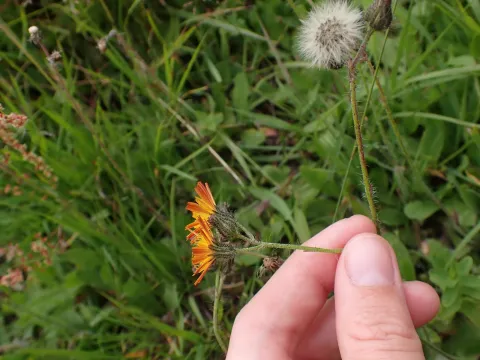
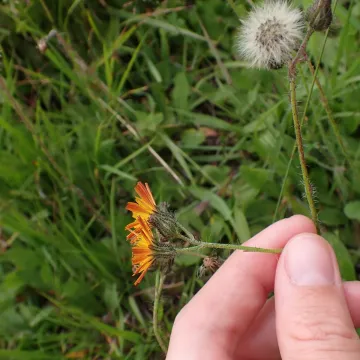
Blytt's hawkweed (Pilosella blyttiana) is a perennial herbaceous plant belonging to the Asteraceae family. This species is recognized as a hybrid-origin taxon, resulting from natural crosses between related hawkweed species. It exhibits a distinct growth pattern characterized by robust root systems and a strong ability to adapt to diverse ecological conditions.
The native distribution area of this culture is primarily found in Northern and Central Europe. It thrives in open, sunny locations with well-drained sandy or rocky soils. Its evolutionary development in these environments has endowed it with significant resilience to temperature fluctuations, making it a subject of interest for research regarding its role in low-input agricultural systems.
Botanically, the plant develops a dense basal rosette of leaves covered in fine hairs, which serves as an adaptation to reduce transpiration. The stem structure includes stolons, facilitating vegetative propagation and enabling the plant to colonize open spaces efficiently. The inflorescences are typical bright yellow capitula, common within the Asteraceae family, which appear during the mid-summer season.
Regarding cultivation, Blytt's hawkweed requires well-aerated soils and sufficient sunlight. It is sensitive to waterlogging, necessitating proper land management to ensure optimal drainage. When integrated into agricultural practice, it responds well to moderate fertilization, though excessive nitrogen can compromise its structural integrity and increase susceptibility to environmental stress.
The agricultural usage of this species is primarily focused on soil conservation and as a component of biodiversity-rich pastures. Its ability to tolerate low-nutrient substrates makes it useful for land restoration projects where more demanding crops might fail.
- High drought tolerance
- Vegetative reproduction capabilities
- Suitable for marginal lands
Common phytosanitary concerns include powdery mildew during humid periods and various leaf-eating insects. Management strategies typically involve balanced soil nutrition and regular monitoring of plant density to prevent the build-up of pests. Sustainable agricultural practices, such as integrated pest management, are recommended to maintain healthy stands and maximize the ecological benefits of the crop.
Photo gallery