Hoppe's hawkweed
Pilosella hoppeana
Description
Hoppe's hawkweed (Pilosella hoppeana) is a perennial herbaceous plant belonging to the Asteraceae family. Historically linked to the Hieracium genus, it is now classified within the Pilosella genus. This plant is well-regarded by gardeners for its ability to form dense, low-growing mats of foliage, making it an excellent choice for ground coverage in specific landscape settings.
The species originates from the mountainous regions of Central and Southern Europe. It is naturally adapted to high-altitude environments such as alpine meadows, rocky slopes, and dry, open grasslands. Its evolution in these environments has endowed it with significant resilience to poor soil conditions and fluctuating temperatures, making it a robust species for specialized cultivation.
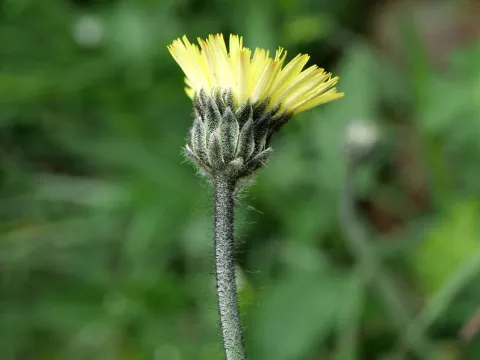
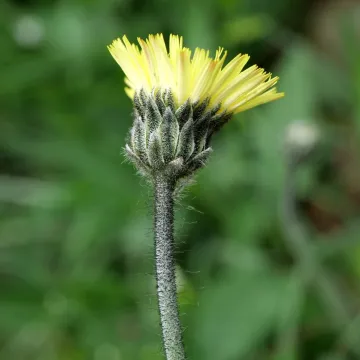
Botanically, Hoppe's hawkweed is characterized by basal rosettes of obovate leaves that feature dense, soft hairs, giving the plant a distinctive silvery-green appearance. The flowering stems are typically short, carrying solitary yellow flower heads. The root system is relatively shallow but highly efficient at absorbing moisture, which supports its survival in thin, rocky substrates.
In terms of cultivation, this species requires well-draining soil to prevent root rot, which is its most common physiological issue. It thrives in full sunlight and requires very little fertilization, as it is adapted to nutrient-poor environments. Minimal maintenance is required once established, primarily consisting of weeding to ensure the plant is not outcompeted by more aggressive neighboring flora.
The primary use of Hoppe's hawkweed is in ornamental landscaping, particularly for rock gardens, crevice gardens, and alpine-style troughs. While it has some historical use in traditional medicine, it is not an agricultural commodity. Common issues include fungal pathogens such as powdery mildew in poorly ventilated, overly humid conditions, and occasionally aphids during the peak growing season.
Photo gallery