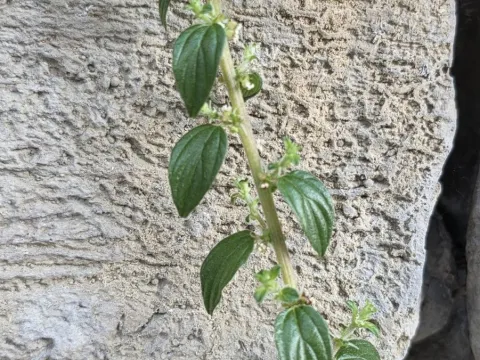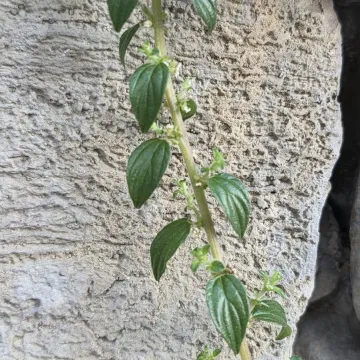
Pouzolzia zeylanica
Pouzolzia zeylanica
Description
Pouzolzia zeylanica is a perennial herbaceous plant belonging to the Urticaceae family. Unlike many members of this family, it lacks stinging hairs, making it easy to handle. This species is known for its creeping habit and ability to form dense clusters, which makes it an interesting subject for both botanical research and practical cultivation.
The plant originates from tropical and subtropical Asia, spanning regions from India to Southeast Asia and China. It thrives in humid environments, frequently colonizing rice paddies, riverbanks, and shaded areas. Its natural distribution demonstrates an evolutionary adaptation to environments where moisture is abundant and constant, allowing it to compete effectively with other ground cover vegetation.
Botanically, the plant exhibits significant leaf polymorphism, with blades ranging from narrow lanceolate to ovate shapes. The flowers are minute and unisexual, clustered in axillary glomerules. The root system is shallow but highly efficient at nutrient uptake, allowing the plant to sustain rapid vegetative growth during the peak of the rainy season or in well-irrigated garden conditions.
To successfully cultivate Pouzolzia zeylanica, one must ensure a growing medium that is rich in organic matter and maintains consistent moisture levels. The plant is best suited for partial shade, as excessive direct sunlight can cause leaf chlorosis and growth inhibition. Proper spacing is required to prevent fungal outbreaks caused by high humidity, and drainage must be maintained to prevent root rot during excessive rainfall.
Economically, the plant is primarily valued for its medicinal properties. Traditional systems of medicine utilize its leaves and roots for treating inflammation, skin lesions, and bacterial infections. Beyond its pharmaceutical value, the plant is increasingly recognized in sustainable agriculture as a potential ground cover to prevent soil erosion and maintain moisture in orchard soils, contributing to overall ecosystem health.
- High moisture requirements
- Medicinal potential
- Soil erosion control properties
- Ease of vegetative propagation
Photo gallery