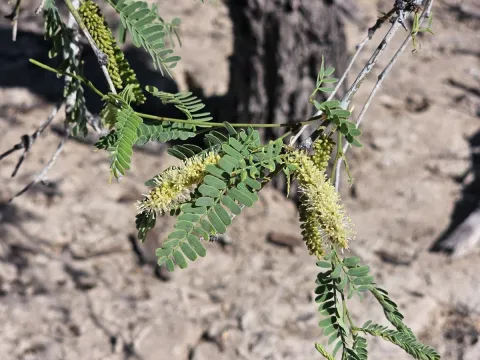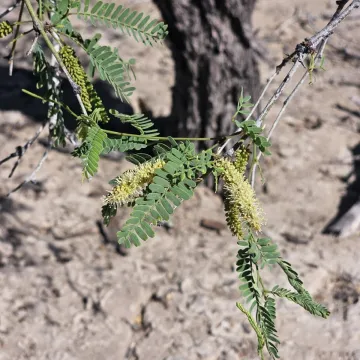
Prosopis articulata
Prosopis articulata S. Watson
Description
Prosopis articulata is a resilient woody species belonging to the Fabaceae family, widely recognized for its adaptation to arid and semi-arid environments. As a member of the legume family, it plays a vital role in desert ecosystems by maintaining vegetation cover in hostile conditions where most crops fail.
The native range of this species is primarily focused in the desert regions of northwestern Mexico and the southwestern United States. These areas are characterized by low precipitation and high thermal variability, conditions under which Prosopis articulata thrives due to its specialized morphological and physiological adaptations.
Morphologically, the plant is characterized by a deep taproot system, which allows it to access water tables at significant depths. The foliage is small and resilient to heat, while the reproductive organs consist of distinct jointed pods that are rich in sugars and proteins, serving as a critical food source for both wildlife and livestock.
Regarding soil requirements, the species is remarkably flexible, thriving in sandy, rocky, and saline environments that are unsuitable for many other crops. Agronomic management is minimal, focusing primarily on the establishment phase; once mature, the plant requires virtually no irrigation or intensive fertilization to maintain growth.
Agricultural applications of Prosopis articulata are diverse, spanning from the production of nutrient-dense forage to the utilization of its dense wood for high-quality fuel or crafts. Furthermore, the species is essential for soil conservation, as it effectively combats erosion and contributes to nitrogen fixation, enhancing the quality of the soil for other desert-adapted plants.
- Extreme drought and heat tolerance.
- Significant nitrogen-fixing capability.
- High nutritional value of seed pods.
- Adaptability to high soil salinity.
- Efficiency in controlling soil erosion.
Photo gallery