Salvinia cucullata
Salvinia cucullata
Description
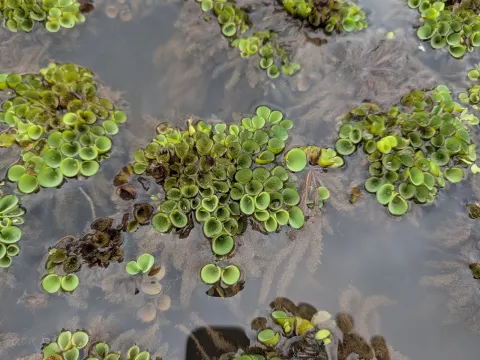
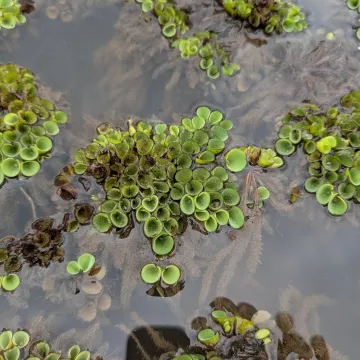
Salvinia cucullata is a specialized floating aquatic fern belonging to the Salviniaceae family. It is distinct from other species in the genus due to the shape of its floating leaves, which curl inwards to form a hood-like structure, giving it the common name hood-leaved salvinia. It represents an important biological resource for ornamental aquatics and environmental management.
Originating from the tropical wetlands of Southeast Asia, this species thrives in stagnant or slow-moving water bodies. It has historically been found in regions such as Thailand, India, and Vietnam, where it often colonizes rice paddies and swampy areas. Its ability to thrive in nutrient-rich water makes it a highly efficient biological agent for natural filtration systems.
The botanical architecture of this plant is unique, consisting of a horizontal stem bearing whorls of three leaves. Two leaves are floating, densely covered with trichomes that repel water, while the third leaf is submerged and modified into a root-like, filamentous structure. This submerged structure is highly effective at absorbing essential nutrients directly from the water column, fueling the plant's rapid growth rate.
In terms of agricultural requirements, Salvinia cucullata demands temperatures between 22°C and 28°C and thrives under high light intensity. Adequate lighting is crucial for maintaining the compact, hood-like shape of the leaves; under low light, the plant becomes leggy and loses its structural integrity. It requires no soil, as all metabolic functions are supported through direct interaction with the surrounding water environment.
The primary utility of this plant includes its role in phytoremediation, where it acts to reduce nitrogen and phosphorus levels in polluted waters. Furthermore, it is widely utilized in the aquarium trade as a floating cover for fry and smaller fish species, providing both shelter and supplemental oxygenation. While relatively robust, the plant can suffer from fungal infections in stagnant air environments and is sensitive to the accumulation of surface oils or excessive surface tension, which can disrupt its buoyancy.
Photo gallery